
Introduction
Japanese automaker Nissan Motor Co. is reportedly planning to halt vehicle production at its Wuhan plant in China during the current fiscal year, which concludes on March 31, 2026. This development was reported by the Yomiuri Shimbun newspaper, which cited unidentified sources familiar with the matter. The move signals a significant adjustment by Nissan as it grapples with mounting challenges in the world’s largest automotive market.
Background: Wuhan Plant Operations
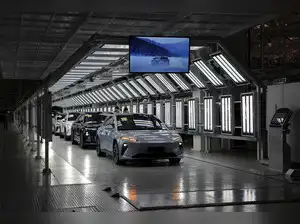
The Wuhan plant, located in the central Chinese city of Wuhan, has been a key manufacturing hub for Nissan’s operations in China. It is a leased facility, operated in partnership with Dongfeng Motor Group Co., Nissan’s longstanding Chinese joint venture partner. Nissan began leasing the plant from Dongfeng in 2022, using it primarily to produce the Ariya electric crossover and the popular X-Trail SUV.
Despite the plant’s initial promise, it has faced significant hurdles in maintaining operational efficiency. With a production capacity designed to manufacture up to 300,000 vehicles annually, recent reports suggest that its utilization rate has plummeted to below 10%. Such a dramatic decline in production underscores the intense pressure foreign automakers are facing from increasingly competitive domestic brands in China.
Market Challenges in China
The Chinese automotive market has evolved rapidly over the past few years. Once dominated by international giants like Nissan, Toyota, Volkswagen, and General Motors, the landscape is now shifting toward local players such as BYD, Nio, and XPeng. These homegrown companies have gained an edge, particularly in the electric vehicle (EV) segment, where demand is growing robustly.
Chinese automakers have been quick to launch high-quality, competitively priced electric and hybrid vehicles that resonate with local consumers. Meanwhile, foreign brands like Nissan have struggled to keep pace with changing consumer preferences, pricing pressures, and the technological sophistication offered by their Chinese rivals.
Nissan’s decision to end production at the Wuhan plant is widely seen as a reflection of these broader market dynamics. It also highlights the ongoing challenges for traditional automakers trying to transition from internal combustion engine (ICE) vehicles to electric models while facing stiff competition.
Nissan’s Strategy in China
While Nissan has yet to officially confirm the report, it issued a brief statement when approached for comment. A company spokesperson declined to address the specifics regarding the Wuhan facility, reiterating only that Nissan remains committed to strengthening its presence in China through a range of strategic initiatives.
Nissan has been seeking to revamp its business model in China as part of its global restructuring plan. Earlier in 2024, the company unveiled a new midterm business strategy, “The Arc,” aimed at expanding its EV lineup, streamlining operations, and boosting profitability across major markets, including China.
Part of Nissan’s challenge has been its reliance on relatively older platforms and technology for its Chinese offerings. In contrast, local manufacturers have aggressively innovated, integrating cutting-edge battery technologies, autonomous driving features, and smart connectivity options into their vehicles at competitive prices.
Implications for Dongfeng Nissan Partnership
The Wuhan plant is one of several facilities operated under the Dongfeng Nissan alliance, which has been in place for nearly two decades. The partnership has historically been successful, helping Nissan become one of the best-selling foreign car brands in China during the early 2010s.
However, the closure of the Wuhan production line could raise questions about the future of the Dongfeng Nissan partnership. Analysts suggest that both companies may need to recalibrate their strategies, either by consolidating production at other facilities or by exploring new joint ventures that are better aligned with the evolving Chinese auto market.
It is unclear whether the cessation of production at Wuhan will result in job losses, although downsizing could be an unavoidable consequence. The Yomiuri report did not elaborate on Nissan’s plans for the workforce currently employed at the plant.
Broader Industry Trends
Nissan’s decision is not occurring in isolation. Other international carmakers are also rethinking their strategies in China amid slowing overall demand for traditional vehicles and a surge in local EV sales. Companies like Stellantis, Ford, and Hyundai have either closed factories, scaled back operations, or shifted their focus to exports and new energy vehicles.
Moreover, China’s state-backed push toward new energy vehicles (NEVs) — which includes EVs, plug-in hybrids, and hydrogen fuel cell vehicles — has fundamentally altered the competitive landscape. The government’s supportive policies, generous subsidies, and aggressive environmental targets have all contributed to the rise of domestic champions at the expense of many foreign automakers.
Nissan’s reported move to cease production at its Wuhan facility marks a significant shift in its China strategy. While the company has not officially confirmed the closure, the factors cited — including drastically low utilization rates and fierce competition from Chinese automakers — point to a broader recalibration by Nissan in one of its historically most important markets.
As global automotive trends continue to evolve, particularly with the acceleration of electric vehicle adoption, Nissan’s experience in Wuhan could serve as a cautionary tale for other foreign automakers navigating the complex and rapidly changing Chinese auto industry. The next few years will be crucial as Nissan and its peers adapt their strategies to survive and thrive in this new competitive reality.