
Government Prioritizes Environmental Responsibility Amidst Mining Sector Pressure
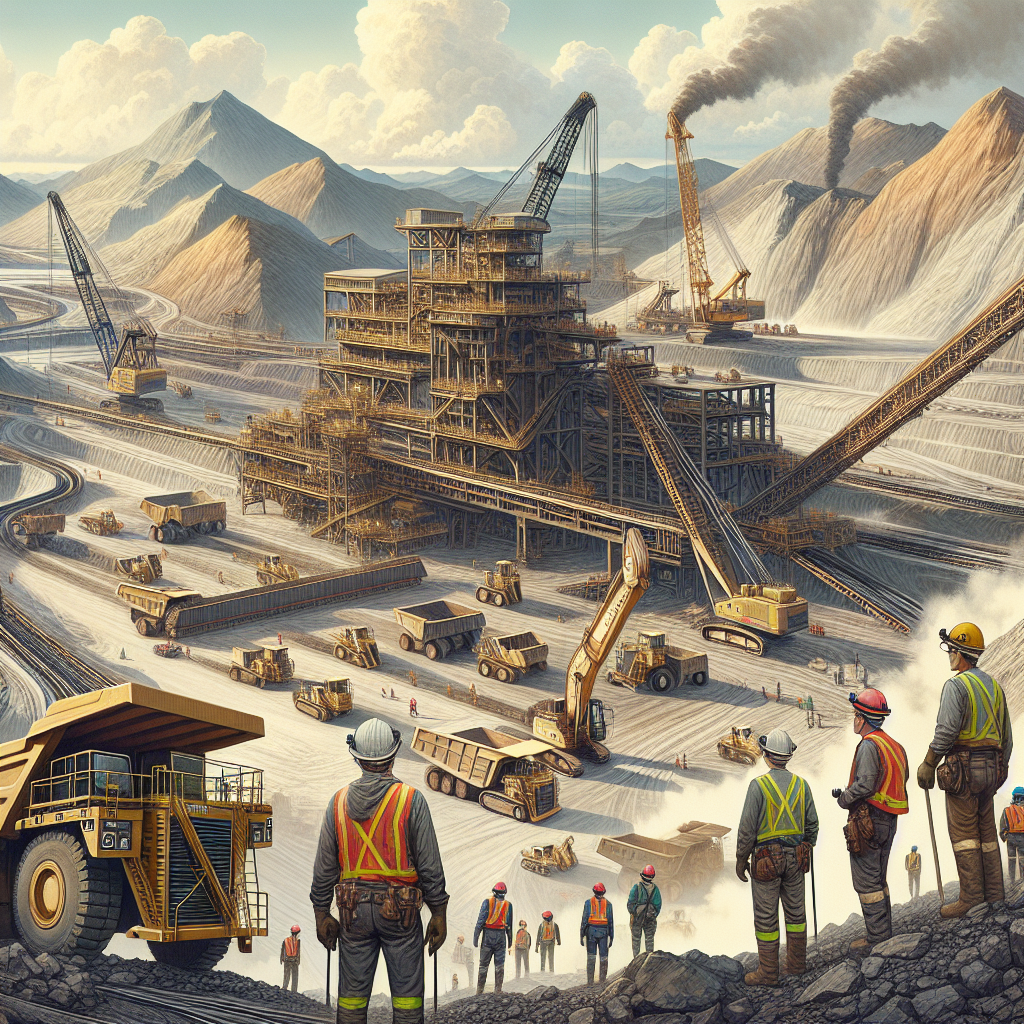
In a notable development, Panama’s government has officially sanctioned a maintenance plan for the Cobre Panama mine, one of the largest open-pit copper mines in Central America. The announcement was made by Julio Molto, Panama’s Minister of Trade and Industry, during a recent press briefing. The decision reflects a cautious and responsible approach by the Panamanian authorities, who are balancing the nation’s economic interests with environmental conservation.
The approved plan was proposed by Canadian mining giant First Quantum Minerals Ltd., the company that operates the Cobre Panama project. However, it is important to note that the plan strictly focuses on maintenance activities and does not permit the resumption of mining operations at this time.
Environmental Stewardship at the Core of the Plan
Minister Julio Molto made it clear that the government’s decision is rooted in a commitment to uphold environmental standards and prevent ecological degradation. He stated, “This maintenance plan is designed solely to preserve the environmental integrity of the site. There is no approval to resume mining activities.”
The maintenance strategy is intended to manage the mine’s infrastructure in a way that ensures it does not pose environmental hazards while operations are halted. This includes the monitoring of water sources, controlling tailings and waste management systems, and maintaining equipment and facilities to prevent leakage or contamination.
A Strategic Pause, Not a Green Light for Mining
The move to allow maintenance, without restarting full-scale mining, is a strategic pause rather than a return to active resource extraction. It sends a message that the Panamanian government is acutely aware of public concerns regarding environmental degradation and is prepared to act accordingly, even under pressure from business stakeholders.
Over the past year, the Cobre Panama mine has been the subject of significant scrutiny and protest, especially following legal and social debates about the impact of large-scale mining on Panama’s ecosystems and indigenous communities. The Supreme Court of Panama had earlier ruled a key mining contract unconstitutional, leading to a suspension of operations.
First Quantum’s Role and Responsibilities
As the operator of the mine, First Quantum has expressed its readiness to comply with all governmental regulations. The company submitted the maintenance plan as part of its ongoing collaboration with Panamanian authorities to ensure that the mine site remains environmentally safe and stable during the suspension period.
The company’s statement emphasized that the maintenance work is essential to “avoid long-term damage to critical infrastructure and mitigate risks of environmental harm.” By maintaining key systems and conducting routine inspections, First Quantum aims to uphold its obligations to the state and surrounding communities.
Balancing Economic and Environmental Objectives
Panama faces a complex challenge—navigating the tension between environmental protection and economic needs. The mining sector, and specifically the Cobre Panama project, has historically played a significant role in the country’s economy, contributing substantially to GDP, employment, and foreign investment.
However, the growing awareness and activism around environmental issues have led to a reassessment of priorities. The government’s decision to focus on environmental safety over immediate economic gain reflects a broader trend seen in many countries striving for sustainable development.
Julio Molto highlighted this balance in his remarks, saying, “While we understand the economic value that mining can bring, we cannot compromise the environmental health of our nation. This decision reflects our responsibility to future generations.”
Impact on Local Communities and Employment
The suspension of full operations at the Cobre Panama mine has had ripple effects on nearby communities and thousands of workers associated with the project. Many jobs remain in limbo as the site operates in a limited capacity focused on safety and maintenance.
Nevertheless, the maintenance phase is expected to retain a smaller workforce for critical environmental and technical functions. While this is not a complete solution to the economic challenges faced by local residents, it does provide a stopgap measure to keep the site operational in a minimal yet essential way.
Community leaders have expressed mixed reactions. Some welcome the government’s emphasis on environmental safeguards, while others continue to call for a long-term resolution that protects both livelihoods and natural resources.
Looking Ahead: What Comes Next?
The future of the Cobre Panama mine remains uncertain. While the maintenance plan ensures environmental safety for the present, it does not resolve the deeper legal and social controversies surrounding the mine’s long-term operations.
Panama’s government has indicated that any future decisions regarding the resumption of mining activities will be subject to rigorous environmental, legal, and public review. This suggests that stakeholders should not expect a quick return to full-scale mining, but rather a measured and transparent process that takes into account all dimensions of the issue.
Industry analysts believe that the coming months will be crucial for determining the direction of Panama’s mining sector. The government’s actions are being closely watched by environmental groups, investors, and international partners alike.
The approval of a maintenance plan at the Cobre Panama mine marks a pivotal moment in Panama’s approach to natural resource management. By prioritizing environmental safety without rushing into renewed mining operations, the government has demonstrated a commitment to sustainable governance and responsible decision-making.
As Panama navigates this delicate balance between economic development and environmental stewardship, the world will be watching to see how the nation sets a precedent for managing extractive industries in a time of growing ecological awareness.