
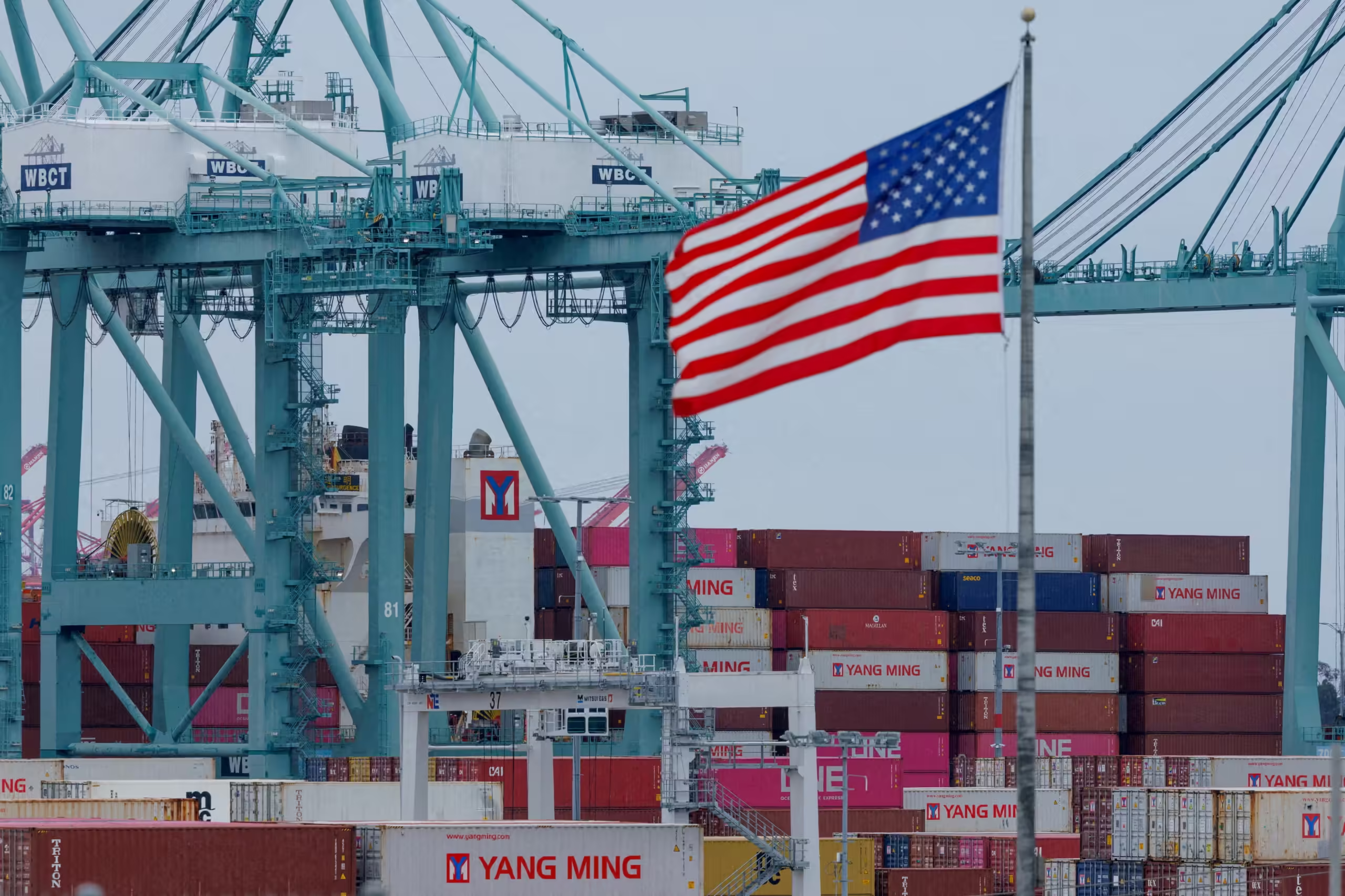
The United States is reportedly shifting its trade strategy, seeking more limited and targeted trade agreements with international partners in a bid to secure quick wins before a looming tariff deadline set by former President Donald Trump. According to the Financial Times (FT), which cites sources familiar with the discussions, trade officials are focusing on streamlining negotiations and accelerating timelines to conclude agreements ahead of the July 9 cutoff.
A Strategic Pivot in US Trade Policy
Rather than pursuing broad and comprehensive trade pacts, U.S. trade officials are now emphasizing smaller, more manageable deals. This pivot is seen as a strategic move aimed at achieving tangible progress under intense time pressure. With Trump’s July 9 tariff deadline approaching, there is increasing urgency to finalize agreements that could help shield key trading partners from punitive tariffs or provide the Biden administration with leverage in broader geopolitical or economic matters.
While Reuters has not independently verified the FT’s report, the move reflects growing concerns within the administration about the political and economic consequences of failing to address trade imbalances or secure protections for American industries.
Deadline Driven by Trump-Era Tariffs
The July 9 deadline is tied to provisions and reviews stemming from tariff policies enacted during the Trump presidency. These tariffs, often imposed under Section 301 of the Trade Act of 1974, primarily targeted imports from China and other countries deemed to be engaging in unfair trade practices. The reviews scheduled around this date are expected to influence the future direction of U.S. trade enforcement strategies.
Many U.S. companies and industry groups have been lobbying for clarity on the administration’s trade stance, fearing that extended uncertainty or additional tariffs could disrupt supply chains and dampen investment. With these concerns in mind, U.S. negotiators are working rapidly to conclude narrowly scoped deals that could either delay or mitigate the impact of new or reinstated tariffs.
Targeted Negotiations with Key Partners
According to FT’s sources, negotiations are being fast-tracked with several strategic partners, though the specific countries involved were not disclosed in detail. The report suggests that the U.S. is looking for agreements focused on specific sectors—such as agriculture, semiconductors, clean energy, and digital services—rather than comprehensive free trade agreements (FTAs).
These sector-specific deals are considered more achievable in the short term and may provide mutual benefits without requiring full-scale renegotiation of broader economic policies. They also offer the advantage of being more politically palatable domestically, particularly at a time when protectionist sentiment remains high.
Political and Economic Implications
The shift toward narrower trade deals comes as the Biden administration faces mounting pressure from both domestic industry and international allies. Many U.S. businesses are looking for stability and predictability in trade policy, while some foreign governments are frustrated by the lack of progress on major agreements.
The urgency is also driven by the upcoming U.S. presidential election cycle. Trade policy has become a politically charged issue, and the administration is eager to avoid headlines about job losses or economic disruptions tied to unresolved trade tensions. By securing even limited agreements, the White House can claim victories in areas like boosting exports or protecting critical supply chains.
Trade Talks in a Complex Global Landscape
This strategic recalibration in trade policy is taking place against a backdrop of broader global economic uncertainty. The ongoing conflict in Ukraine, geopolitical tensions with China, and the slow post-pandemic recovery in many economies have complicated traditional trade diplomacy.
Moreover, the U.S. has been increasingly using trade as a tool of foreign policy—aligning economic engagement with national security concerns, especially in relation to technology transfers, energy partnerships, and rare earth minerals. These factors add layers of complexity to negotiations, even for smaller deals.
Concerns Over Transparency and Long-Term Vision
Despite the potential short-term benefits, critics have raised concerns about the lack of transparency in the current round of negotiations. Some trade experts argue that without broader public consultation and legislative oversight, these narrower deals could lead to fragmented trade policy or unintended economic consequences.
Additionally, there is skepticism about whether short-term, narrowly focused deals can effectively address the systemic issues at the heart of U.S. trade imbalances—such as intellectual property theft, forced technology transfer, and non-tariff barriers in key markets.
Industry Reactions and Market Watch
Business groups have responded cautiously to the FT report. While many welcome any effort to bring clarity to trade relationships and avert additional tariffs, there is a general preference for comprehensive and predictable agreements that offer long-term benefits.
Industries with significant exposure to global supply chains—such as automotive, electronics, and agriculture—are especially concerned about the potential fallout if no agreements are reached before the deadline. Some have intensified lobbying efforts in Washington, urging officials to prioritize negotiations with their most critical partners.
Conclusion: A Race Against Time
With just days remaining before the Trump-era tariff review deadline, the Biden administration’s trade team is in a race against time. By narrowing the scope of negotiations, they hope to deliver concrete wins that can serve both strategic and political purposes. Whether these deals will be enough to satisfy stakeholders at home and abroad remains to be seen.
What is clear, however, is that U.S. trade policy continues to evolve in response to shifting global realities—and the decisions made in the coming days could shape economic relations for years to come.