The Wearables Market: Why Apple Rules the Game—Without a Smart Ring
With its lineup of Apple Watches and AirPods, Apple is at the top of the market in wearables. These combine convenience, technology, and an air of friendly user design in ways that set an extremely high bar for other brands in wearable technology. However, unlike most companies, Apple tends to hone existing products rather than pursue every category within wearables. While a smart ring would, in many ways, appear to be the next logical step within this expanding landscape, comments from Hale suggest that Apple may be right to steer clear of such a niche.
Our CEO speaks regarding the technical and design issues in putting together a ring having advanced sensors, which might result in the fact that this ring format would not fit into the current product strategies of the Apple.
What Makes a Smart Ring Challenging to Develop?
Smart rings exhibit unique limitations and challenges, vastly different from those that smartwatches or other wearables had to confront. Listed below are some of the specific hurdles.
Size Constraints and Component Limitations
Due to the small size, there is a limitation to the kind of sensors, batteries, and processors that can fit inside the smart ring. Most activities, such as monitoring heart rate, sleeping pattern, oxygen levels, and more, are incredibly hard to fit in components without sacrificing wearability. Even the most significant tech companies can barely overcome this miniaturization obstacle since doing so requires a whole lot of advanced hardware and battery technology.
Battery Life and Energy Efficiency
Then, of course, there’s the issue of battery capacity. Apple‘s products are known for their long-lasting performance, a standard that‘s hard to maintain in a ring due to its limited battery size. While Oura has made impressive strides with battery life in its rings, Apple‘s desire for consistency across its product range could make this a deal-breaker. Squeezing multi-day battery life out of something as small as a ring–one that meets Apple’s standards, no less-is a monumental challenge.
Data Accuracy and Quality
Accuracy is the backbone of any wearable health tech product. But then, consumers expect an Apple device to be as reliable as it is innovative. High accuracy in tracking biometrics is complicated on a ring, due to the reduced contact area and inconsistent placement of the ring on the finger. Any deviation in this could lead to less-than-perfect readings, which may not fit into Apple’s really stringent standards regarding how well its products should work.
Market Demand and Brand Strategy
Another important reason might be how conservative Apple has been with product diversification. While Apple is a leader in constant innovation, it rarely jumps into the pool of niche markets that might not have evident potential for mass appeal. The smart ring market, though growing, still does remain somewhat niche and perhaps out of reach for Apple‘s goals of more extensive consumer adoption. Instead, Apple is most likely to focus efforts on refining the wearables lineup already there, such as the Apple Watch, which already covers practically all aspects of health monitoring, among other features, and is equipped with an already established rather large user base.
Why the Oura Ring is Leading the Pack
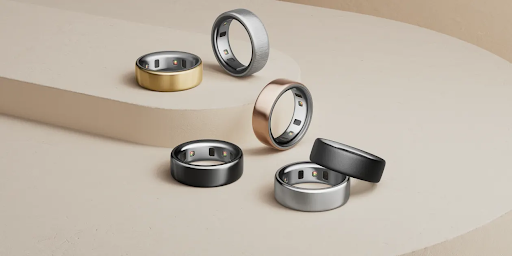
While Apple seems to be pulling back from the smart ring space, Oura has taken the challenge head-on and furthered the envelope on how to make it even better. The Oura Ring, developed for health tracking, has attained a big following for its feature set in light of its compact design. Oura positions its product for a niche audience that’s interested in health and wellness, and therefore has invested heavily in improving metrics such as sleep analysis, heart rate variability, and readiness scores.
Knowing full well that such a giant as Apple might finally decide to bypass the ring market, Oura has a huge advantage. The Oura Ring can position itself in the health-conscious consumer sector as the smart ring without the immediate threat of Apple dominance.
The Future of Wearables Beyond the Smart Ring
Apple‘s seeming reluctance to join the smart ring fray doesn‘t have to translate to a general lack of innovation on its part. Rather than making sure to mark its presence in literally every nook and cranny within the space, Apple might want to double down on what it is already doing with the Apple Watch–or pursue entirely new forms of health tracking that fit within its ecosystem. Newer formats, like smart glasses or wearables included directly within clothing, may be an emerging opportunity in which Apple could venture forward with their technology.
Given the influence Apple has, its strategic decision not to enter the smart ring market sends a signal about the viability and mass appeal these devices have for both consumers and competitors. As wearables continue to rise in popularity, we‘re likely to see companies make focused bets rather than spread resources across all device categories.
How Oura and Apple Serve Different Consumer Needs
Also, the fact that Oura is focused on personal health tracking through a very non-intrusive ring aligns the products well with the needs of their audience, while Apple‘s more general approach to its devices appeals to a wider range of customers, as is evident with the Apple Watch. Not having a smart ring could be a blessing for Apple in concentrating on improvements that will better integrate health tracking with other smart devices in its ecosystem-a space where Oura does not compete.
While Apple Watch is still Apple‘s flagship wearable for health and fitness, Oura Ring appeals to those who want a less intrusive piece of gear capable of yielding accurate data on sleep and wellness. Thus, the two will provide different consumer needs and, in such a way, expand the market, possibly encouraging even more innovation across wearables in various formats.
Apple’s Choice Highlights Challenges and Opportunities
That Apple won’t be chasing after a smart ring says much about the challenge in creating quality wearable technology at that form factor. As Oura‘s CEO noted, it‘s no small task to combine functionality, accuracy, and battery life into a device of that size worn on the finger. Regardless, this speaks to a strategic development where honing existing products within its suite better reflects both the brand values and technical priorities of Apple.
This means for Oura, it’s the ability to continue leading the smart ring market, unimpeded by Apple, making moves that are important for its target audience. Not anytime soon will an Apple Smart Ring likely be in the hands of users, but based on their investment in improving their ecosystem, it is a reasonable expectation that further advancements in wearable health technology focused on user experience, data quality, and ecosystem connectivity will continue.