Wall Street Gains: A Catalyst for Asia-Pacific Optimism
Wall Street closed on a strong note , driven by investor enthusiasm around easing inflationary pressures and positive corporate earnings reports . These gains provided the perfect tailwind for Asia-Pacific markets , which tend to take cues from U.S . financial markets due to the global interconnectedness of trade and finance .
The S&P 500 , Nasdaq , and Dow Jones Industrial Average all posted solid gains in their latest trading sessions . This positive sentiment was carried over into the Asia-Pacific region , with key indices in Tokyo , Hong Kong, and Sydney showing marked improvements . The ripple effect of Wall Street ’s performance cannot be overstated it sets the tone for risk appetite across global markets, including Asia’s vibrant economies .
South Korea’s Decision to Hold Interest Rates: A Bold Move
South Korea ’s central bank surprised markets by maintaining its benchmark interest rate at 3.50%. Many analysts had anticipated a hike in light of global tightening trends . However , the Bank of Korea chose a steady path , citing the need to balance inflation control with economic growth .
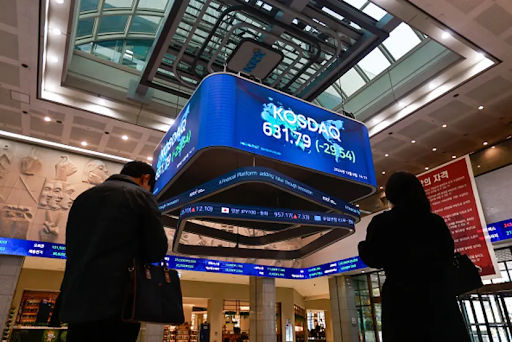
This decision highlights South Korea ’s cautious approach to monetary policy . With inflation showing signs of stabilization and concerns about consumer spending, policymakers opted to prioritize economic resilience . This unexpected move injected fresh optimism into South Korea ’s stock markets, with the KOSPI rising modestly in response .
For South Korea, this decision reflects a broader strategy of ensuring domestic financial stability while staying watchful of global economic headwinds . It ’s worth noting that the BoK has raised rates several times over the past year, and this pause offers breathing room for businesses and households alike .
Market Reaction Across the Asia-Pacific Region
Japan : Nikkei Boosted by Wall Street Trends
Japan ’s Nikkei 225 climbed higher , buoyed by technology stocks and a favorable yen dollar exchange rate . The optimism from Wall Street , coupled with easing inflation worries in Japan , has invigorated investor sentiment .
China : A Mixed Bag of Reactions
Chinese markets , represented by the Shanghai Composite , saw modest gains . However , lingering concerns about China ’s property sector and regulatory overhangs kept gains in check . Positive cues from Wall Street were balanced by caution in local market dynamics .
Australia : Mining Stocks Shine
The Australian ASX 200 index also benefited from Wall Street’s rally , with mining and resource stocks leading the charge . Australia ’s heavy reliance on commodity exports makes it particularly sensitive to global growth signals , and Wall Street ’s gains provided a welcome boost .
South Korea : KOSPI Rallies on Rate Hold
South Korea ’s KOSPI index enjoyed a positive session , with gains in technology and manufacturing sectors . The Bank of Korea ’s decision to hold rates steady was seen as a green light for growth focused investments , particularly in industries that had been weighed down by higher borrowing costs .
Why South Korea’s Rate Decision Matters Globally
South Korea ’s economy is a bellwether for the Asia-Pacific region due to its export-driven nature and strong ties to global supply chains . The decision to hold interest rates steady sends a powerful message : South Korea is prioritizing stability over aggressive tightening .
This move could influence other central banks in the region to take a more measured approach to monetary policy . Countries like India, Indonesia , and Thailand may closely watch South Korea’s economic performance in the coming months to gauge the effectiveness of a steady interest rate policy .
Additionally , global investors view South Korea as a proxy for broader economic trends in Asia. A steady hand from the BoK reassures markets that the region ’s third largest economy is prepared to navigate potential global headwinds .
The Role of Inflation in Central Bank Decisions
Inflation remains a critical factor in central bank policymaking . South Korea’s inflation rate has cooled in recent months , hovering around 3.4% in December—down from its peak earlier in 2023 . This decline gave the BoK room to pause rate hikes .
By comparison , central banks in the U.S . and Europe have continued to raise rates aggressively , prioritizing inflation control . South Korea ’s approach underscores the importance of context in monetary policy . While global economies share some common challenges , each nation ’s unique circumstances require tailored solutions .
Key Sectors to Watch in the Asia-Pacific Markets
Technology
The technology sector is one of the biggest beneficiaries of steady interest rates . Lower borrowing costs make it easier for tech companies to finance innovation and expansion . Investors are likely to focus on semiconductor stocks , a cornerstone of South Korea’s economy .
Manufacturing and Exporters
Manufacturers and export driven businesses stand to benefit from stabilized rates. South Korea , as a hub for electronics, automobiles , and shipbuilding , could see renewed interest from global investors .
Consumer Discretionary
Retail and consumer focused businesses often face the brunt of high interest rates . A pause in hikes could stimulate consumer spending , providing a much-needed boost to this sector .