
Google AI Model Release : The Next Stage in Google’s Virtual Agent Push Google has taken a bold step in...
A recent announcement that Northvolt-the most dominant battery-maker in Europe-has filed for bankruptcy has sent shock waves across the continent. Meanwhile, the ongoing electric vehicle (EV) revolution is fastening its pace across the world, which raises pressing questions about whether Europe is adequately prepared to compete in that global EV market. This landmark move can be seen as a significant moment threatening not only the region’s ambitions in the EV market but also its energy independence and supply chain stability .
Northvolt has long been considered a cornerstone in the building of Europe’s sustainable battery ecosystem. It was founded in 2016, and subsequently began appearing more widely as Sweden’s first large-scale manufacturer of lithium-ion batteries on its way to becoming a vital player in reducing Europe’s reliance on Asian battery suppliers. It has a mission to deliver high-performance lithium-ion batteries by way of clean energy, attracting investments from major players like BMW and Volkswagen and getting government subsidy to have broader footing in pursuit of Europe’s green energy transition. Innovative Gigafactory projects promised to transform the region into a powerhouse for battery production .
The bankruptcy of Northvolt casts significant doubts over such goals. It, in fact, unveils deeper challenges in the European EV landscape- rising production costs, supply chain vulnerability, and increasing competition from the established global players .
Europe is staking so much of its future on winning the global transition to electric. Automakers and governments have pledged billions of euros toward the cause of electrification, with strict emission regulations forcing an abrupt shift away from fossil fuels. Batteries lie at the heart of this revolution, which makes Northvolt’s bankruptcy such a devastating blow to the continent’s hopes .
The loss of a significant domestic battery manufacturer would mean even more reliance on imports from China, South Korea, and Japan. Such a dependence could weaken the ability of the continent to become its own independent producer, with decarbonization, therefore, potentially being pushed into more distant timelines. In addition, Northvolt’s collapse may lessen the investment and funding for other clean energy startups .
The bankruptcy comes amidst a complex scenario of combined financial and operational challenges. Faced with skyrocketing raw material prices, supply chain disruptions, and its own ambitions and demonstrated track record of building high volumes of output, Northvolt struggled to scale its production to meet the enormous global demand for batteries in times when essential components such as lithium, cobalt, and nickel have become much more expensive .
In addition, the Gigafactory projects in Northvolt required substantial up-front investments. As with all such facilities designed to produce batteries at scale, they are capital-intensive and may take years to pay off. Adding to the problems was a slowdown in European EV sales growth, partly reflecting both economic uncertainty and inflation with a commensurate diminution in consumer buying power. This environment made it increasingly difficult for Northvolt to continue to attract the additional funding needed to sustain operations .
Northvolt’s crash could have far-reaching effects on the European battery industry. Many of the new battery entrants used the success of Northvolt to attract investments and prove the region’s capability in competing globally. Its failure may cause investors to freeze over newfound risks of underwriting European battery ventures, a scenario that might stall innovation and capacity-building work .
This, however, raises further concerns about broader industrial policies under the EU. The Green Deal of Europe was meant to make this region the global champion of clean energy solutions and clean technologies. Northvolt’s financial woes appear to reveal a lack of ambition in support measures, as these seem insufficient to protect companies against market fluctuations and international competition .
While Northvolt’s bankruptcy is undoubtedly a set-back, it is not the end of Europe’s EV aspirations. The region retains enormous manufacturing experience in the automotive sector as well as an integrated commitment towards renewable energy. Policymakers and industry leaders alike have to take action quite rapidly by sorting out those challenges exposed by the failure of Northvolt. That includes enhancing financial support for startups in battery sectors, making resiliency possible in supply chains, and bringing the private and public sectors closer together .
Furthermore, Europe may have to reposition itself concerning global competition. While striving for self-sufficiency remains a laudable goal, greater cooperation with international partners can help better improve the risks involved with supply chain disruption and resource shortagesv.
Northvolt’s rise and fall teach a great deal of lessons to Europe’s clean energy transition. The company proved that the most advanced battery technologies are achievable in Europe, fueled by renewable energy sources, along with innovative designs. But bankruptcy is a stark reminder that ambition needs to find a balance with financial prudence. Companies in emerging industries now face complex dynamics-the race to high growth often means equally strong risks .
For policymakers, the story of Northvolt shines a light on the need for holistic strategies that cover every segment of the battery value chain-from raw materials sourcing to recycling. Ensuring access to critical minerals, incentivizing their domestic production, and researching alternative chemistries of batteries are crucial steps to building a resilient and competitive battery industry .
Despite the Northvolt bankruptcy, the ambitions of European EV ambitions are well on the agenda. Automakers, governments, and consumers alike recognize the grave urgency that extends the date to transition to sustainable transportation. By learning from Northvolt’s experience, doubling down on battery sector support, and insisting that anything can be done within the set arena, Europe will make its move toward climate goals .
The future will demand synergies, bold investments, and a mindset accepting change in market situations. Northvolt’s legacy, even if related to financial problems, can still give light for green future achievements for Europe .

Google AI Model Release : The Next Stage in Google’s Virtual Agent Push Google has taken a bold step in...

Ferrari earnings growth 2025 Shares Pop 8% as Luxury Carmaker Sees Further Earnings Growth Ferrari earnings growth 2025 , the...

How China’s DeepSeek Benefits for India: A New Era of Technological Synergy China’s advanced technological solutions, like DeepSeek, have been...

Google AI Model Release : The Next Stage in Google’s Virtual Agent Push Google has taken a bold step in...
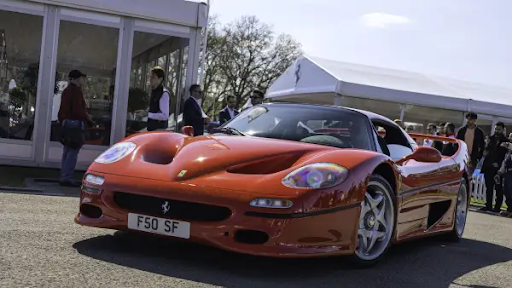
Ferrari earnings growth 2025 Shares Pop 8% as Luxury Carmaker Sees Further Earnings Growth Ferrari earnings growth 2025 , the...

How China’s DeepSeek Benefits for India: A New Era of Technological Synergy China’s advanced technological solutions, like DeepSeek, have been...