
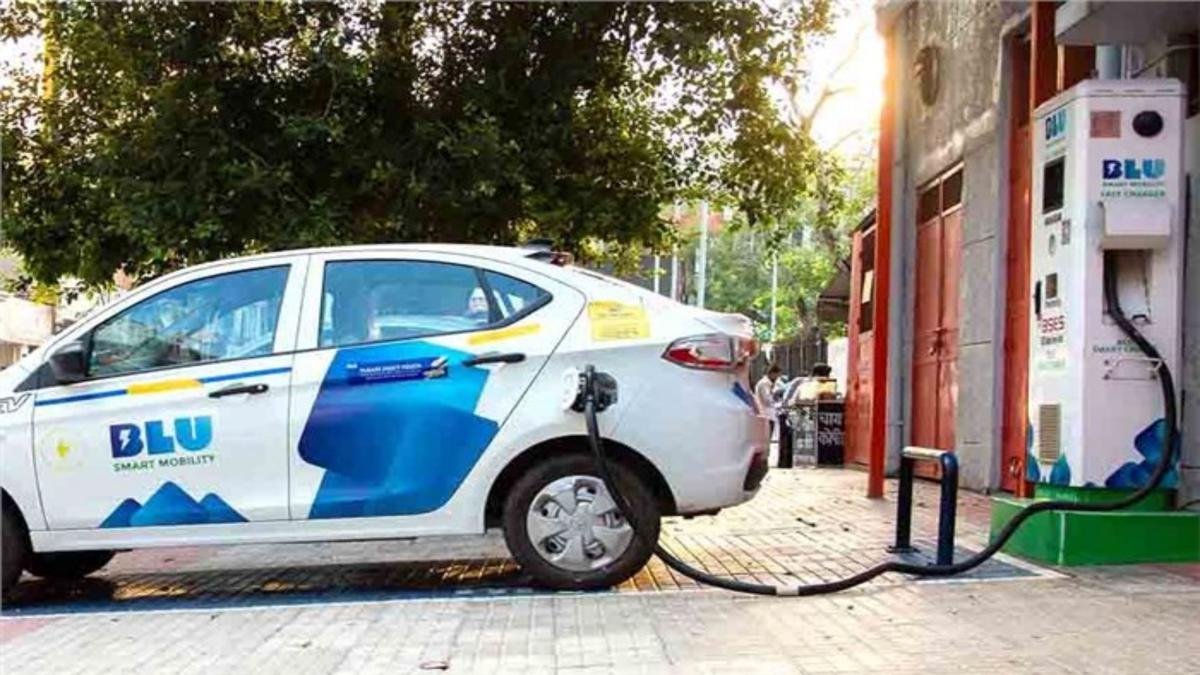
the rapidly evolving Indian startup ecosystem, where innovation and investment often go hand in hand, any controversy involving emerging companies can send ripples across the entire landscape. The recent allegations against BluSmart, an electric ride-hailing service, have triggered a wave of concern among investors and industry veterans alike. Among the voices expressing worry is Sethurathnam Ravi, the former chairman of the Bombay Stock Exchange (BSE), who believes such issues can deeply undermine the credibility of new-age enterprises.
BluSmart in the Spotlight
BluSmart, known for its all-electric fleet and environmentally-conscious urban mobility solutions, has recently come under scrutiny due to allegations that question the company’s operational and financial transparency. While the specifics of the charges are still being examined, the fallout is already making its presence felt within investor circles.
S. Ravi, a seasoned financial expert and an influential voice in India’s capital markets, has publicly voiced his concern over the controversy. According to him, these developments could significantly shake investor sentiment, not just toward BluSmart, but toward the entire startup space.
Investor Sentiment at Risk
“Incidents like these don’t just affect one company,” Ravi remarked. “They have a domino effect that can discourage investors from putting their trust and capital into other emerging businesses.”
Investor confidence is a delicate asset—built over time but quickly eroded by scandals or allegations. Ravi emphasized that early-stage startups often rely heavily on goodwill and perception to raise funds, build partnerships, and acquire customers. When trust is compromised, it becomes increasingly difficult for such companies to secure backing, even if their fundamentals remain sound.
Impact on Startups and the Ecosystem
The Indian startup ecosystem, while robust and innovative, is still maturing. Ravi noted that many startups are in the early stages of growth and rely heavily on external funding to scale operations. “Even well-managed startups with solid governance frameworks could find themselves in a tight spot if investor trust in the broader system starts to dwindle,” he explained.
He warned that the BluSmart case might tarnish the overall image of the Indian startup sector, especially in the eyes of global investors. “We are at a point where India is becoming a hub for innovation-driven enterprises. Any incident that questions the integrity of our ventures puts that progress at risk.”
Need for Transparency and Governance
Ravi strongly advocated for better governance practices among startups. He called for increased transparency, regular audits, and stronger compliance mechanisms to ensure that companies operate with integrity and remain accountable to stakeholders. “Startups need to realize that growth must go hand-in-hand with governance. A flashy valuation means nothing if the company cannot demonstrate financial and ethical credibility,” he said.
He also pointed out that boards and founders need to adopt a more professional approach when it comes to managing their internal controls and reporting practices. Investors, too, should perform thorough due diligence before putting their money into any venture.
Lessons for the Investment Community
From an investor’s point of view, Ravi suggested that the BluSmart incident should be seen as a wake-up call. Investors must demand greater accountability from startups and push for stronger internal systems before committing large sums of money. “Rather than getting carried away by pitch decks and valuation numbers, investors need to focus on the fundamentals—cash flows, governance structures, and long-term sustainability,” he advised.
He also called upon venture capitalists and private equity players to play a more active role in shaping ethical business practices within their portfolio companies.
The Role of Regulatory Bodies
While the Indian government and regulatory authorities have taken several steps to promote startup growth, Ravi believes that there’s a need for tighter regulatory frameworks around private companies, especially those operating in sectors that directly affect consumers. He suggested the creation of a watchdog body dedicated to monitoring startup ethics, governance, and financial discipline.
“Just as listed companies are answerable to SEBI and shareholders, private startups should also be accountable to an oversight mechanism that ensures fair play,” he said.
A Crucial Moment for BluSmart and the Industry
Whether or not the allegations against BluSmart prove to be substantial, the damage to its image is already done. For a company positioning itself as a clean and green mobility solution, credibility is everything. As it works to rebuild its reputation, the entire startup ecosystem will be watching closely.
S. Ravi concluded his remarks by stressing that this moment should be used constructively by the broader ecosystem. “This is a time for introspection. Startups must learn that in the long run, trust and transparency are more valuable than rapid expansion or inflated valuations.”