
Introduction The global financial markets are facing renewed volatility as the Trump administration announced broader-than-expected reciprocal tariffs. This latest move...
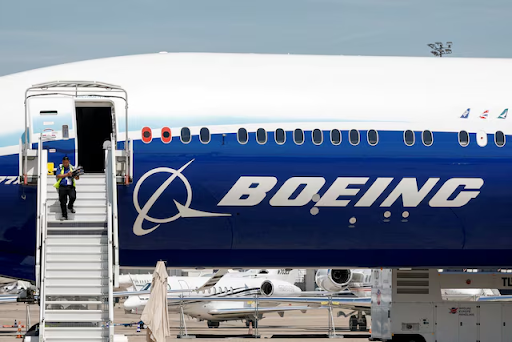
Boeing’s struggles continue to deepen, and recent revelations by the company’s CEO indicate that a swift resolution is unlikely. The aerospace giant, already grappling with various challenges, now faces an alarming financial crisis. Losses have ballooned to a staggering $6 billion, with no immediate solution in sight. The Boeing CEO has made it clear that the company’s predicament is complex and will require time and careful management to overcome.
When bond yields rise, it typically signals higher interest rates and increasing borrowing costs, which can have ripple effects throughout the economy. For Wall Street, higher yields often result in lower stock prices, as they can make fixed-income investments more attractive than equities. Investors, therefore, shift their money away from stocks in favor of bonds, leading to sell-offs in the stock market.
Boeing, one of the most influential names in the aerospace industry, has been navigating turbulent times. Over the past few years, the company has faced a series of challenges that have severely impacted its financial health. From the fallout of the 737 Max crashes to supply chain disruptions and production delays, Boeing’s road to recovery has been anything but smooth.
The $6 billion loss recently reported only adds to the mounting concerns. Boeing’s CEO has openly acknowledged the gravity of the situation, warning that there is no “quick fix” for the challenges ahead. This frank admission underscores the complexity of the issues Boeing is dealing with, spanning from production hurdles to broader industry-wide disruptions.
Several factors have contributed to Boeing’s growing financial woes. The company’s commercial aircraft division, in particular, has been a significant source of losses. Production delays, especially in the manufacturing of key models like the 787 Dreamliner and the 737 Max, have severely impacted deliveries and customer confidence. On top of that, supply chain disruptions due to the global pandemic, compounded by labor shortages and rising costs, have only exacerbated Boeing’s problems.
Additionally, Boeing’s defense sector, traditionally seen as a more stable and profitable part of the business, has also encountered issues. A series of production challenges and delays in key defense programs have added further strain to the company’s financial position. These setbacks have shaken investor confidence, and Boeing’s stock has reflected these ongoing concerns, underperforming compared to its industry peers.
In response to these mounting challenges, Boeing’s leadership has been clear in its communication: patience is essential. Boeing CEO David Calhoun has emphasized that while the company is working diligently to address these issues, the road to recovery will be long and difficult. There is no magic bullet to resolve the deep-rooted challenges the company is facing.
Calhoun has outlined a series of strategies aimed at steadying the ship. These include a renewed focus on quality control, improving relationships with suppliers, and addressing production bottlenecks. Boeing is also working closely with regulators to ensure that its products meet all safety and quality standards, particularly as the 737 Max returns to service around the globe.
However, despite these efforts, Calhoun has made it clear that results won’t be immediate. Boeing’s struggles are systemic, requiring long-term solutions rather than short-term fixes.
Boeing’s crisis is not unfolding in a vacuum. The entire aerospace industry has been shaken by the events of the last few years. Global air travel, while recovering from the depths of the pandemic, has not yet returned to pre-2020 levels. This slower recovery has affected orders for new aircraft, further complicating Boeing’s financial recovery.
Moreover, Boeing faces stiff competition from its European rival, Airbus. Airbus has managed to weather the storm more effectively, capturing a larger share of the global market. Boeing’s lag in production and delivery schedules has allowed Airbus to gain ground, especially in the narrow-body aircraft segment where the 737 Max competes with Airbus’s A320neo.
Additionally, ongoing geopolitical tensions, particularly with key markets like China, have created further uncertainty for Boeing. The Chinese market represents a significant portion of global demand for commercial aircraft, and ongoing trade tensions have delayed crucial deals that Boeing was counting on for recovery.
While the outlook for Boeing is certainly challenging, there is room for cautious optimism. The global demand for air travel is expected to continue growing in the coming years, driven by the recovery of both leisure and business travel. As airlines refresh their fleets, there will be opportunities for Boeing to capitalize on this demand—provided it can overcome its current challenges.
Boeing’s management remains committed to addressing the issues plaguing the company. Key to this will be regaining the trust of both customers and investors, something that can only be achieved through consistent delivery of quality products and timely fulfillment of orders. Boeing is also working to improve its financial health by cutting costs and optimizing its operations.
In the long run, Boeing’s deep expertise and established position in the market could help it bounce back. However, as the CEO has warned, there is no quick fix, and the company must brace for a prolonged period of recovery and rebuilding.

Introduction The global financial markets are facing renewed volatility as the Trump administration announced broader-than-expected reciprocal tariffs. This latest move...

Introduction As the world braces for a new wave of tariffs imposed by former U.S. President Donald Trump, global markets...

Market Overview The Indian equity markets faced a turbulent start in Tuesday’s trade, with both the Nifty 50 and Sensex...

Google AI Model Release : The Next Stage in Google’s Virtual Agent Push Google has taken a bold step in...

Ferrari earnings growth 2025 Shares Pop 8% as Luxury Carmaker Sees Further Earnings Growth Ferrari earnings growth 2025 , the...
How China’s DeepSeek Benefits for India: A New Era of Technological Synergy China’s advanced technological solutions, like DeepSeek, have been...