

Northvolt Bankruptcy: Major Setback for Europe’s EV Goals | BizBlog News Battery Giant Northvolt Files for Bankruptcy: A Major Setback for Europe’s EV Ambitions A recent announcement that Northvolt-the most dominant battery-maker in Europe-has filed for bankruptcy has sent shock waves across the continent. Meanwhile, the ongoing electric vehicle (EV) revolution is fastening its pace across the world, which raises pressing questions about whether Europe is adequately prepared to compete in that global EV market. This landmark move can be seen as a significant moment threatening not only the region’s ambitions in the EV market but also its energy independence and supply chain stability . Understanding Northvolt’s Role in Europe’s EV Push Northvolt has long been considered a cornerstone in the building of Europe’s sustainable battery ecosystem. It was founded in 2016, and subsequently began appearing more widely as Sweden’s first large-scale manufacturer of lithium-ion batteries on its way to becoming a vital player in reducing Europe’s reliance on Asian battery suppliers. It has a mission to deliver high-performance lithium-ion batteries by way of clean energy, attracting investments from major players like BMW and Volkswagen and getting government subsidy to have broader footing in pursuit of Europe’s green energy transition. Innovative Gigafactory projects promised to transform the region into a powerhouse for battery production . The bankruptcy of Northvolt casts significant doubts over such goals. It, in fact, unveils deeper challenges in the European EV landscape- rising production costs, supply chain vulnerability, and increasing competition from the established global players . Why Northvolt’s Bankruptcy Matters to Europe’s EV Ambitions Europe is staking so much of its future on winning the global transition to electric. Automakers and governments have pledged billions of euros toward the cause of electrification, with strict emission regulations forcing an abrupt shift away from fossil fuels. Batteries lie at the heart of this revolution, which makes Northvolt’s bankruptcy such a devastating blow to the continent’s hopes . The loss of a significant domestic battery manufacturer would mean even more reliance on imports from China, South Korea, and Japan. Such a dependence could weaken the ability of the continent to become its own independent producer, with decarbonization, therefore, potentially being pushed into more distant timelines. In addition, Northvolt’s collapse may lessen the investment and funding for other clean energy startups . The Financial Pressures That Drove Northvolt to Bankruptcy The bankruptcy comes amidst a complex scenario of combined financial and operational challenges. Faced with skyrocketing raw material prices, supply chain disruptions, and its own ambitions and demonstrated track record of building high volumes of output, Northvolt struggled to scale its production to meet the enormous global demand for batteries in times when essential components such as lithium, cobalt, and nickel have become much more expensive . In addition, the Gigafactory projects in Northvolt required substantial up-front investments. As with all such facilities designed to produce batteries at scale, they are capital-intensive and may take years to pay off. Adding to the problems was a slowdown in European EV sales growth, partly reflecting both economic uncertainty and inflation with a commensurate diminution in consumer buying power. This environment made it increasingly difficult for Northvolt to continue to attract the additional funding needed to sustain operations . The Broader Implications for Europe’s Battery Sector Northvolt’s crash could have far-reaching effects on the European battery industry. Many of the new battery entrants used the success of Northvolt to attract investments and prove the region’s capability in competing globally. Its failure may cause investors to freeze over newfound risks of underwriting European battery ventures, a scenario that might stall innovation and capacity-building work . This, however, raises further concerns about broader industrial policies under the EU. The Green Deal of Europe was meant to make this region the global champion of clean energy solutions and clean technologies. Northvolt’s financial woes appear to reveal a lack of ambition in support measures, as these seem insufficient to protect companies against market fluctuations and international competition . Can Europe Recover from Northvolt’s Collapse? While Northvolt’s bankruptcy is undoubtedly a set-back, it is not the end of Europe’s EV aspirations. The region retains enormous manufacturing experience in the automotive sector as well as an integrated commitment towards renewable energy. Policymakers and industry leaders alike have to take action quite rapidly by sorting out those challenges exposed by the failure of Northvolt. That includes enhancing financial support for startups in battery sectors, making resiliency possible in supply chains, and bringing the private and public sectors closer together . Furthermore, Europe may have to reposition itself concerning global competition. While striving for self-sufficiency remains a laudable goal, greater cooperation with international partners can help better improve the risks involved with supply chain disruption and resource shortagesv. Lessons from Northvolt’s Journey Northvolt’s rise and fall teach a great deal of lessons to Europe’s clean energy transition. The company proved that the most advanced battery technologies are achievable in Europe, fueled by renewable energy sources, along with innovative designs. But bankruptcy is a stark reminder that ambition needs to find a balance with financial prudence. Companies in emerging industries now face complex dynamics-the race to high growth often means equally strong risks . For policymakers, the story of Northvolt shines a light on the need for holistic strategies that cover every segment of the battery value chain-from raw materials sourcing to recycling. Ensuring access to critical minerals, incentivizing their domestic production, and researching alternative chemistries of batteries are crucial steps to building a resilient and competitive battery industry . Rebuilding Confidence in Europe’s EV Future Despite the Northvolt bankruptcy, the ambitions of European EV ambitions are well on the agenda. Automakers, governments, and consumers alike recognize the grave urgency that extends the date to transition to sustainable transportation. By learning from Northvolt’s experience, doubling down on battery sector support, and insisting that anything can be done within the set arena, Europe will make its move toward climate goals . The future will demand synergies, bold investments, and a mindset

European Tech Funding Declines but Stabilizes | BizBlog News
European Tech Funding Declines but Stabilizes | BizBlog News European Tech Funding Declines for Third Consecutive Year — But the Sector Is Finally Stabilizing The European tech industry has experienced a very challenging period over the past three years, with steady dropping funds. Startups and major players alike have been affected by this tightening of venture capital pipelines and investor enthusiasm but, amidst the otherwise dismal downturn, the sector is beginning to stabilize, with at least some analysts predicting a more balanced funding landscape in the near future . The European Tech Funding Decline: What’s Behind It? A combination of global and regional factors has led to the decline in funding European tech. Economic uncertainty-the inflation and shifts in interest rates-have kept investors nervously hesitant to commit funds to new business undertakings. The war in Ukraine and its economic ripples have added to Europe’s geopolitical challenges, which has led to wavering . In fact, the overall tech sector has had a rebalancing of sorts following the pandemic-driven spurt in digital adoption that inflated valuations and created a competitive but unsustainable funding environment. Many see the correction at the funding level as merely normalizing the industry . Signs of Stability in the Tech Ecosystem Funding is actually down, but the European tech sector is far from dead. New data points to a sea change-the focus now toward strategically deployed investments in secure industries like health tech, renewable energy, and AI-and toward only companies that promise profitability, all suggesting a maturing market . Some economies in Europe, as with the Nordics and Southern Europe, are doing better than others. Innovation support efforts are stepping up, with places like Germany, France, and the UK setting aside funding incentives to boost the tech ecosystem . Mergers and acquisitions are also on the rise, as larger companies snap up struggling startups, creating opportunities for consolidation and strengthening the industry’s overall stability. The Role of Policymakers in Supporting Recovery European policymakers are taking the leading role in determining the future of the tech industry. For governments, investments into digital infrastructure and research are key drivers for the competitiveness of economies that are exposed to a global market. Through joint efforts at the EU level, such as increased funding of green technologies and AI, an ecosystem is being established that will encourage innovation despite the unfavorable market conditions . The European Investment Fund has also played a vital role in that it has devised initiatives of supporting venture capital and private equity firms focusing on targeting early-stage startups. All these are helping to keep the entrepreneurial spirit alive, though private investors stay cautious . Why Stabilization Could Be the Best Outcome It may not feel like much next to the explosive growth years of the past decade, but for many in the tech industry, this stabilization provides an opportunity to recalibrate . Rather than chasing lofty valuations, companies are focusing on sustainable growth models . This shift is leaving the ecosystem healthier with innovation driven by long-term goals rather than short-term gains . In addition, stabilization creates confidence in the market as investors are likely to reenter, knowing their money is being invested into businesses that are realistic growth-oriented. It is a win-win affair indeed, better news to startups and established players alike, who hope to expand Future Outlook for European Tech Funding The future European tech funding should be cautiously optimistic. Analysts predict that although it would take a lot longer for the highs of previous years to return, it will not stop attracting interest because of its ability to be adaptable and innovative. AI, renewable energy, and health tech all have room for disruption, ensuring Europe remains on the map as a global hub for technological advancement . Startup founders and investors increasingly align themselves with combined goals to achieve the development of a more resilient ecosystem. Growing attention to sustainable funding practices, government-backed initiatives, and a new focus in European tech – set up for a more stable but measured growth phase . European Tech Funding: A Turning Point As stabilization in the industry sets in, it becomes clear that the tide is turning from doom and gloom to cautious hope . Sure, European tech funding might have declined for the third year in a row, but the resilience and flexibilities shown by the sector are at play here . With strategic investments, supportive policies, and sustainable growth, Europe’s tech industry is in a great shape to weather present-day challenges and blossom moving forward . UseFull Links Technology European Tech CEOs Advocate ‘Europe-First’ Mentality | BizBlog News November 19, 2024/No Comments European Tech CEOs Advocate ‘Europe-First’ Mentality | BizBlog News European Tech CEOs Urge a ‘Europe-First’ Mentality to Counter U.S. Dominance… Read More Homebuilder Deal Activity Insights | BizBlog News November 15, 2024/No Comments Homebuilder Deal Activity Insights | BizBlog News Homebuilder Deal Activity Is Surging, Fueled by Major Japanese Buyers The American real… Read More Rocket Lab Stock & Revenue Growth | BizBlog News November 14, 2024/No Comments Rocket Lab Stock & Revenue Growth | BizBlog News Rocket Lab Stock Pops 25% After Company Reports Strong Revenue Growth… Read More Load More End of Content. Home About Stories Contact UseFull Links Technology European Tech CEOs Advocate ‘Europe-First’ Mentality | BizBlog News November 19, 2024/No Comments European Tech CEOs Advocate ‘Europe-First’ Mentality | BizBlog News European Tech CEOs Urge a ‘Europe-First’ Mentality to Counter U.S. Dominance… Read More Homebuilder Deal Activity Insights | BizBlog News November 15, 2024/No Comments Homebuilder Deal Activity Insights | BizBlog News Homebuilder Deal Activity Is Surging, Fueled by Major Japanese Buyers The American real… Read More Rocket Lab Stock & Revenue Growth | BizBlog News November 14, 2024/No Comments Rocket Lab Stock & Revenue Growth | BizBlog News Rocket Lab Stock Pops 25% After Company Reports Strong Revenue Growth… Read More Load More End of Content.

European Tech CEOs Advocate ‘Europe-First’ Mentality | BizBlog News
European Tech CEOs Advocate ‘Europe-First’ Mentality | BizBlog News European Tech CEOs Urge a ‘Europe-First’ Mentality to Counter U.S. Dominance After Trump Victory The resurgence of protectionist policies under the Trump administration has had a profound impact on the global technology sector. For European tech leaders, this era signaled a pivotal moment to rethink their role in the international tech landscape. By championing a “Europe-first” mentality, they seek to counterbalance the dominance of U.S. tech giants and ensure that the continent remains competitive and sovereign in the face of global challenges. The Ongoing Struggle Against U.S. Dominance For decades, America has dictated the way the global technology industries work. Google, Apple, and Amazon have redrawn market boundaries, leaving the rest of Europe struggling to chase their lead. Scale and funding have been main drivers of the innovative might that Silicon Valley has provided U.S. firms . This supremacy manifested more forcefully during the era of the Trump presidency for America. His policies were blatantly pro-American- from trade to technological development, where Europeans had to fight economic and technological dependence on America. This itself presented the fact that Europe needed to unify its tech ecosystem to continue protecting its own interests and innovating on its own terms . Data Sovereignty as a Central Concern Data control and protection have emerged as two of the most pressing matters in modern digital economy. In Europe, that is a continent which holds high regard for privacy and security, relying on U.S. tech platforms for data processing will raise calls for concern. Fear about the implications of foreign control over sensitive information has long haunted European leaders, which has spurred landmark regulations like GDPR . While GDPR is a step forward, high-tech companies’ CEOs across Europe believe that the continent should take a more holistic and integrated approach towards data sovereignty. This means making and keeping infrastructure in European territory owned by Europeans so that local companies are not held hostage to the likes of American platforms. Such efforts will be vital for sustaining both privacy and economic security within the digital world . The Call for Unity Among European Tech Leaders Hence, many of the leaders of Europe have presented calls for a deeper cooperation to enforce a Europe-first mentality. The CEOs of startups and established corporations alike want a setting that will innovate and grow within the European continent. It will require crossing beyond the threshold of nationalisms into a common European understanding . Collaboration is particularly key in dealing with the problem of regulatory fragmentation, which usually undermines growth for European firms. One must realize that a comprehensive, unified digital market will be important in allowing local firms to scale and innovate against global competitors. European leaders recognize it as an opportunity to foster a tech ecosystem that is not only competitive but also values-driven, aligned with European principles in privacy, sustainability, and inclusion . Trump’s Presidency as a Wake-Up Call for Europe The “America First” doctrine of the Trump administration made European countries realize their vulnerabilities. U.S. policies restricting international cooperation in technology and trade made European companies more aware of their dependence on American technology infrastructure. Realizing this, they have been gaining momentum toward policies that foreground European sovereignty in critical industries, including technology . European tech CEOs would, therefore, view this as a moment to reassess and strengthen the approach they have on innovation . With the help of local talent and resources, Europe can look towards reducing its dependency on US tech while charting out a more independent path forward . Building a Strong European Tech Ecosystem It is far from just investment in talent and innovation as a victorious European tech industry. European universities and research institutions already rank among the world’s best in areas like artificial intelligence and quantum computing. By directing resources into education, research, and entrepreneurship, Europe can develop a next generation of innovators . Cross-border collaboration is equally important. Europe’s rich diversity provides many opportunities but, in many instances, fragmented policies and regulations have been holding back progress. A new joint approach will help realize the success of a competitive and resilient tech ecosystem as national priorities align with broader European goals . Investment is another important parameter. Europe could take the lead in new fields such as green technology, cybersecurity, and AI. If adequate funds are provided, as well as resource deployment that leads to harmonious consumption patterns, European firms would lead the fast-emerging markets . UseFull Links Technology Homebuilder Deal Activity Insights | BizBlog News November 15, 2024/No Comments Homebuilder Deal Activity Insights | BizBlog News Homebuilder Deal Activity Is Surging, Fueled by Major Japanese Buyers The American real… Read More Rocket Lab Stock & Revenue Growth | BizBlog News November 14, 2024/No Comments Rocket Lab Stock & Revenue Growth | BizBlog News Rocket Lab Stock Pops 25% After Company Reports Strong Revenue Growth… Read More Upstart and Toast Soar on Earnings | BizBlog News November 11, 2024/No Comments Upstart and Toast Soar on Earnings | BizBlog News Fintechs Upstart and Toast Soar on Earnings: What’s Fueling Their Impressive… Read More Load More End of Content. Home About Stories Contact UseFull Links Technology Homebuilder Deal Activity Insights | BizBlog News November 15, 2024/No Comments Homebuilder Deal Activity Insights | BizBlog News Homebuilder Deal Activity Is Surging, Fueled by Major Japanese Buyers The American real… Read More Rocket Lab Stock & Revenue Growth | BizBlog News November 14, 2024/No Comments Rocket Lab Stock & Revenue Growth | BizBlog News Rocket Lab Stock Pops 25% After Company Reports Strong Revenue Growth… Read More Upstart and Toast Soar on Earnings | BizBlog News November 11, 2024/No Comments Upstart and Toast Soar on Earnings | BizBlog News Fintechs Upstart and Toast Soar on Earnings: What’s Fueling Their Impressive… Read More Load More End of Content.

Homebuilder Deal Activity Insights | BizBlog News
Homebuilder Deal Activity Insights | BizBlog News Homebuilder Deal Activity Is Surging, Fueled by Major Japanese Buyers The American real estate market has recently become more active as homebuilders attract significant investments by Japanese investors. For several decades, Japan had a strategic interest in investing in foreign markets; however, recent waves of acquisitions and partnerships in the U.S. housing sector signal a new trend. Japanese companies are drawn to the specific opportunities of the U.S. market that reflect demographic shift, competitive housing shortage, and favorable exchange rates. Thus, the growth in deals between U.S. homebuilders and Japanese businesses changes the landscape of real estate and heralds a long-term impact. Understanding the Rise of Japanese Investments in U.S. Real Estate It is certainly not the first time that Japanese investors engage in overseas investments. They spread investments over a considerable number of industries over several decades. What’s new, however, is the strong interest concentrated on US residential construction and homebuilding industry. Of course this might be related to Japan’s stable economic conditions, positive currency exchange, as well as keen desire to invest in stable, income-generating assets. For the Japanese investor, many seem to perceive the American homebuilding market as low-risk with strong reward prospects, in light of the US housing shortage and high demand at this time. Why Japanese Investors Are Betting Big on U.S. Homebuilders 1. Favorable Yen-to-Dollar Exchange Rates A weakened yen over the past several years has meant that Japanese companies have more purchasing power in the U.S. market. An attractive exchange rate allows Japanese companies to buy valuable assets in the U.S. at a relatively lower price and big-ticket investments in American real estate are made more attractive. With this resultant currency advantage, Japanese investors have grown even bolder and will undertake significant projects with leading U.S. homebuilders. 2. Addressing the U.S. Housing Shortage It has now been two decades since demand for housing in the United States exceeded supply. New development is thus in strong demand by both governments and consumers amidst continued shortage and rising affordability issues. By investing in U.S. homebuilders, Japanese firms earn high returns on every investment they make while meeting a vital public need and at the same time improving their brand name. 3. Long-Term Investment Horizons Japanese firms have long-term investment horizons that perfectly match the business scope of the residential real estate industry. Most Japanese firms are in pursuit of long-term sustainable growth and stable returns, unlike some investors who seek to make short-term gains. As such, investing in U.S. homebuilding companies can enable Japanese firms to plant their flag in an industry that will not see demand fall anytime soon. Key Players and Major Deals Driving This Trend Several huge Japanese companies such as Sumitomo Forestry and Sekisui House have been dominating recent news headlines due to huge investments in homebuilding companies in the U.S. Majority of the deals were formed either in partnership, acquisition, or joint venture, hence both companies were made to win and share their respective strengths and risk exposure. For example, Sekisui House partnered with some U.S. builders for its innovative and eco-friendly housing technologies that have the aim of setting new standards for energy-efficient construction in America. High-Profile Transactions and Their Impact Deals of the past years also highlighted the huge investment of the Japanese in U.S. homebuilders. Companies like Sumitomo Forestry, the leading global player in forestry and home building, also invested in stake of one of the leaders in the U.S. homebuilding for further spreading the wings of the company. In these deals, direct American markets open up before Japanese companies, and U.S. builders get much-needed capital to fund expansionary projects. How This Surge Affects the U.S. Housing Market Involvement by Japanese investors is thus stimulating deal activity and also influencing pricing, competition, and supply. “Japanese capital is driving increased housing supply as Japanese investors are helping U.S. homebuilders expand their project pipelines,” says GregoryMiller, but it might offset the shortage partially due to increased demand for new houses, though it raises questions about housing affordability. Economic Ripple Effects These investments have wider macroeconomic effects, positive to the effect of creating employment, higher revenues from properties, and ratcheting up the economies of such localities. This is because every residential flow of investment by Japanese capital generates economic momentum, which eventually trickles down through contractors and suppliers to the communities. The Future of Japanese Investments in U.S. Homebuilding The momentum of Japanese investments in U.S. real estate seems to have no end. Analysts argue that with a strong demand for U.S. housing and a favorable yen-dollar exchange rate, Japanese companies will keep on looking for and closing more lucrative deals. Additionally, the more concerns raised about sustainable houses and energy efficiency in construction, the more the Japanese firms with the right background tend to be good candidates to set up trends and standards in the U.S. market. Emerging Areas of Collaboration Future deals may also expand into joint ventures involving technology and living sustainably. Modular homes, smart housing systems, and carbon-neutral construction are some examples of the areas where Japanese expertise could be made to contribute the most. Thus, involvement of Japanese investors would further tilt the U.S. housing market to be greener than ever. What Triggered the Scaling Back of Block’s Crypto Goals? The last couple of months have witnessed an escalation in market volatility and regulatory attention regarding cryptocurrency. Governments across the world have been imposing more stringent regulations that may degrade the adoption rate and functionality of crypto services for businesses and individual users alike. The changing nature is a risk for companies heavily investing in blockchain technologies, particularly during times of economic decline or instability in the crypto market. Furthermore, the sharp cryptocurrency market crash that began at the start of 2022 put major players in mining, trading, and finance on quite shaky ground. Even behemoths like Block have not been immune to the shockwaves since many cryptocurrency-related projects and assets lose value without any possibility of

Rocket Lab Stock & Revenue Growth | BizBlog News
Rocket Lab Stock & Revenue Growth | BizBlog News Rocket Lab Stock Pops 25% After Company Reports Strong Revenue Growth and First Neutron Deal Rocket Lab has just marked an important milestone that has everyone in both financial and the aerospace industries drooling in excitement. Its stock rose 25% as the company released a very healthy report on its quarterly revenue and announced its first contract for the Neutron rocket, perhaps one of the most critical future launch vehicles in its portfolio. The company’s performance has attracted numerous investors as well as analysts who believe that Rocket Lab is such a rising star in the market of commercial space, in direct competition with heavyweights in the industry. While Rocket Lab’s recent success raises the challenges that this young aerospace company has overcome with incredible speed, it also points to the potential for profitability among emerging players in the space sector. So, let’s dive into what triggered this stock upsurge, what the Neutron deal means for Rocket Lab, and how all these developments set up the company in the continually evolving aerospace market. The Stock Surge: A Closer Look at Rocket Lab’s 25% Rise Rocket Lab was founded in 2006 as one of the leaders in small satellite launch services in the market through its Electron rocket. Its low cost and ability to make frequent launches have made it popular among satellite manufacturers. This firm recently released quarterly revenues that were above the market’s forecast due to successful expansion with more frequent launches, satellite services, and other mission-related solutions. The result? A 25 percent increase in Rocket Lab’s share price following the news. Investors gleed at this additional revenue, as they did in believing this revenue growth was a definitive positive signal for the company’s future. Key Drivers Behind the Stock Jump Several factors contributed to the recent stock surge: The company said its quarterly revenues rose by 38 per cent yearly, led by the record Electron launches and new satellite services contracts. Rocket Lab has signed its first contract with the Neutron rocket as it advances the development of a next-generation rocket. Investor Confidence: In the face of a competitive space landscape, the financial success and new business contracts consolidated investor confidence in Rocket Lab’s future. Rocket Lab proves consistent performance in key milestones: investors gain confidence in the company’s ability to grow their revenue and deliver value. Revenue Growth: Rocket Lab’s Strong Quarter and What It Means for the Future It indicates the success of Rocket Lab’s expansion policy and increasing demand for its services, as the company continues to soar with each quarter, winning major public and private contracts. Rocket Lab showed impressive revenue growth within the quarter while proving that its expansion policy was successful. The Significance of Rocket Lab’s First Neutron Deal One of the most interesting was the first Neutron launch contract. This one will be a reusable, medium-lift rocket capable of delivering much heavier payloads than Electron is and, thus, is considered a direct competitor to larger launch vehicles. What the Neutron Deal Means for Rocket Lab The Neutron contract will provide a source of guaranteed revenue and further reinforce its position as a trusted player in the heavier-lift launch market for Rocket Lab. Such heavy payload capabilities may open up new revenue streams with commercial, government, and defense clients requiring multitran sportation solutions for higher payloads. The contract further shows the client’s confidence in Rocket Lab’s capacity to design and develop complex missions beyond small-satellite payloads. Positioning in the Medium-Lift Market The Neutron launch vehicle is meant to fill in a gap in the middle of the Electron smaller launch vehicles, and heavy-lift launch rockets that resemble SpaceX’s Falcon Heavy. It will have far more options and different flexibility, with different payload arrangements and varied customer requirements. This will give Rocket Lab an advantage over the middle-sized payloads which do not necessarily require the large size for heavy-lift vehicles. Rocket Lab’s Competitive Edge in the Evolving Space Market Rocket Lab has grown very rapidly and, by entering the large payload launch, this company has now made the firm a significant competitor. Some strategies followed by Rocket Lab are of excellent competitive advantage: Innovation in Reusability: Like SpaceX, Neutron of Rocket Lab would also be a reusable launch vehicle that, most importantly, reduces the launch cost and is increasingly efficient. Launch Cadence: Electron by Rocket Lab has attained a higher level of launch cadence compared with most peers and therefore has a track record for reliability that makes it a go-to provider for customers requiring time-sensitive missions. Vertical Integration: Rocket Lab now manufactures satellites in-house and can therefore offer fully integrated mission solutions from end to end, thereby increasing the value to its clients, along with improving control over operations. Increase access to space is the Rocket Lab’s strategic vision, and even though the company is not yet ready to complete the Neutron, it continues to refine its market approach by sealing new deals and expanding its capabilities. What’s Next for Rocket Lab and Investors? It is with the announcement of the Neutron deal and record revenue coming in for a quarter that Rocket Lab appears to be picking up steam to maintain its growth trajectory. Investors are all too eager about what this company might do next, especially in the face of challenges it faces to bring Neutron online. Opportunities for Growth On the other hand, many growth opportunities are still in the future: Government and Defense Contracts: Rocket Lab is seen as an attractive partner, considering that the U.S. government and other international space agencies are increasingly looking at private companies to be sources of reliable launch services. Expansion of Satellite Solutions: The satellite capabilities of Rocket Lab complement its launch services to provide an integrated mission solution compatible with the differentiated needs of its clients. This vision of democratizing space is resonating very well among clients and investors alike. Growing with additional service lines and new technology developments, Rocket Lab

Upstart and Toast Soar on Earnings | BizBlog News
Upstart and Toast Soar on Earnings | BizBlog News Fintechs Upstart and Toast Soar on Earnings: What’s Fueling Their Impressive Growth? Success in the world of FinTech encompasses innovation, resilience, and agility in adapting to market demands. Recently, two such companies, among many others, that demonstrated their strengths include Upstart and Toast. Indeed, both of these FinTech players have gained huge attention, with their stock prices and earnings reports showing strong performances that position them as the standout companies in their respective sectors. But what is the cause of their good fortune, and what does it mean for the future of FinTech? It’s time to look closer at recent performances from Upstart and Toast to understand precisely how they’ve managed to soar. Upstart’s Earnings: A Look at the AI-Driven Lending Model What Is Upstart and How Does It Stand Out? Upstart is a leading AI lending platform that was founded back in 2012. Unlike the traditional banks that are hugely reliant on credit scores for loan eligibility, Upstart deploys artificial intelligence and machine learning algorithms in assessing the creditworthiness of its applicants based on a wide range of criteria, including their employment history, educational background, and even individual behavioral data for a more inclusive and accurate assessment of borrower risk. Upstart’s model has been extremely compelling to both consumers and financial institutions alike because it achieves quicker, easier loan approvals without making significant compromises in risk. The Recent Earnings Surge: Key Metrics and Milestones In its most recent earnings report, Upstart had very strong revenue and profit growth; both results beat market expectations. Strong results reflect the uniqueness in positioning experienced by Upstart in the credit industry. More specifically, Upstart reported a surge in revenue year over year, which was fueled through its partnerships with banks and credit unions leveraging its AI-powered lending model. In addition, Upstart has continued to increase the number of its products, expanding from personal loans into the far-larger auto loans market, which exceeds over $1 trillion within the United States. Revenue growth for the company, further bolstered by its expansion into new loan categories, clearly illustrates potential long-term scalability and market penetration. With the rising demand for credit and the desire of financial institutions for digital solutions, this efficiency in meeting such demands serves as a competitive advantage for Upstart. Toast’s Impressive Growth in the Restaurant Sector What Makes Toast Unique in Fintech? Toast is a restaurant technology company offering a cloud-based software and hardware platform for restaurants. The tools it equips restaurants with-from point-of-sale systems to online ordering and inventory management-are aimed at improving operations, enhancing the customer experience, and driving profitability. Founded in 2011, Toast has grown through rapid sales to small and mid-sized eateries looking to digitize aspects of the restaurant business, much of it coming right after the COVID-19 pandemic disruptions. Toast’s Earnings and Expansion Strategy Toast’s last earnings report had the company boasting of not just stellar revenue growth but also an expanding client base. The growth came both from increased usage of core POS and payment processing offerings and from the uptake of newer offerings such as delivery integration and customer loyalty programs. It has been an enviable opportunity for Toast to capitalize on the growing demand for digital solutions in the hospitality sector because more and more restaurants, especially with labor shortages, are searching for solutions that can help streamline their operations and reduce reliance on staff. Another big metric that probably interested investors was Toast’s annual recurring revenue-a number indicative of a company’s client retention and predictable creation of revenue over time. Continued growth in ARR underlines the deep integration of Toast into its clients’ everyday operations, making it such a critical part of their business model. Furthermore, Toast targets smaller independent restaurants where it can capture that part of the market left unserved by other fintech companies. How Do Upstart and Toast Reflect Broader Fintech Trends? The Shift Toward AI and Automation Both companies represent one of the major tendencies in the segment: AI-driven solutions and automation. AI use at Upstart in assessing creditworthiness, and Toast’s digital restaurant management solutions, adequately demonstrate how to uncomplicate traditionally complex processes with the help of technology. This trend responds to the increasing demand for speed and convenience on the part of consumers and businesses alike and is fully in line with the general development toward efficient, personalized fintech solutions. The Rise of Niche Fintech Players It speaks, too, to the power of specialization within Fintech. Companies like Upstart and Toast don’t try to serve all sectors. Upstart has stuck to its core AI-based lending, while Toast has maintained a focus on restaurant tech. In doing so, they are able to build out deep areas of expertise which is hard to compete with when going up against much broader, more generalized Fintech platforms. These above successes underpin the fact that such niche players can serve specific pain points in industries and thereby gain significant market shares. Why Investors Are Excited About Upstart and Toast Investors can’t stop salivating over Upstart and Toast, for good reason: both firms appear to have top-shelf financials with continued growth-a rare combination sought after in the finicky technology sector. The success of Upstart inherently suggests that AI-backed lending models are at an all-time demand high, while the expansion into new loan types suggests it has barely scratched the surface of its potential. Meanwhile, with Toast’s customer base increasing, while also being able to cross-sell more services to its customers, the company now has a strong growth model. In that direction, while fintech continues to evolve, it is only those companies that can keep up with the emerging trends and consumer demands that are more likely to turn in sustained returns. In the same manner, while Upstart focuses on credit and Toast on restaurant technology, the direction is pretty clear: this is an indicator of larger trends within the fintech landscape. Challenges Ahead: Can Upstart and Toast Sustain Their Momentum? The outlook for both Upstart

Apple Working on AI-enabled HomePod with Touchscreen | Bizblog News
Apple Working on AI-enabled HomePod with Touchscreen and Video Conferencing Features: Report In recent years, Apple has consistently pushed the boundaries of technology, especially in the realm of smart home devices. According to a new report, the company is now exploring a next-generation HomePod that will come with AI-driven capabilities, a built-in touchscreen, and even video conferencing features. This is an exciting step forward for Apple enthusiasts and a clear signal that the company is aiming to make its mark in the increasingly competitive world of smart speakers. As more homes become smarter, an AI-powered HomePod could revolutionize the way we interact with technology, integrating our home systems in ways we’ve never seen before. The report detailing Apple’s work on this cutting-edge HomePod comes as no surprise to those familiar with the company’s recent moves. From its push into artificial intelligence to its ambitious plans for expanding FaceTime and other communication services, the tech giant is poised to reimagine how we think of smart home devices. Apple’s Vision for a Smart Home Apple’s rumored AI-enabled HomePod underscores the company’s commitment to offering a fully integrated smart home experience. By leveraging artificial intelligence, this next-gen HomePod aims to go far beyond playing music or managing home automation. Instead, it’s expected to offer enhanced functionality, including smarter voice recognition, the ability to respond more intelligently to user queries, and deeper integration with Apple’s ecosystem of products. The integration of AI isn’t just about improving basic tasks; it’s about creating a device that can anticipate user needs and interact more seamlessly with other smart home gadgets. Imagine a HomePod that not only controls your lights and thermostat but also learns your daily routine, suggesting optimal settings before you even think to ask. The Touchscreen: A Game Changer for the HomePod One of the standout features of this new HomePod will be its touchscreen. Adding a display to a traditionally voice-activated speaker opens up a wealth of possibilities. While current HomePods are entirely voice-operated, a screen could introduce a range of interactive capabilities. Users may be able to browse playlists, view weather updates, or even control other smart devices more intuitively. Moreover, the touchscreen could offer visual feedback for commands, making it easier to interact with the HomePod in noisy environments or when speaking to the device isn’t feasible. This marks a significant shift in how people will use their HomePod, transforming it into a more versatile and user-friendly hub for managing their home’s connected devices. Video Conferencing: Taking Communication to the Next Level Perhaps the most intriguing aspect of the new HomePod is its rumored video conferencing feature. With Apple already deeply invested in FaceTime and other communication tools, the addition of video calls to the HomePod feels like a natural progression. Imagine hosting a family video chat or joining a business meeting right from your living room, without needing to pull out your phone or computer. The inclusion of video capabilities would also make the HomePod a direct competitor to Amazon’s Echo Show and Google’s Nest Hub Max, both of which already offer similar features. This feature is likely to appeal to users who are already invested in the Apple ecosystem, as it could offer seamless integration with other Apple devices like iPhones, iPads, and Macs. Users could receive calls on their HomePod and transfer them between devices, making it easier than ever to stay connected. AI’s Role in Revolutionizing the HomePod Artificial intelligence has been at the heart of many recent advancements in consumer technology, and its presence in this new HomePod is no exception. AI will not only improve the device’s functionality but also enhance its ability to learn from and adapt to user behavior. One of the key advantages of AI in a smart speaker is its ability to improve voice recognition and understanding over time, leading to a more personalized and efficient user experience. For instance, AI could enable the HomePod to recognize individual users by their voice and provide custom responses based on their preferences. It might suggest your favorite playlist when you wake up or remind you of important tasks later in the day. The potential applications are vast, and the integration of AI could set Apple’s HomePod apart from other smart speakers currently on the market. Competing in a Crowded Market The smart speaker market is already dominated by heavyweights like Amazon’s Echo and Google’s Nest, both of which have garnered significant attention for their voice assistants, Alexa and Google Assistant. However, Apple’s entry into this space with a more advanced HomePod could change the dynamics. While Siri may not be as widely adopted as Alexa or Google Assistant, Apple’s focus on privacy and the seamless integration of its ecosystem might give it an edge among users who are already committed to Apple’s products and services. Moreover, the addition of a touchscreen and video conferencing features would differentiate Apple’s HomePod from its competitors. While Amazon and Google have similar devices, Apple’s penchant for high-quality hardware and software integration could make this new HomePod the device of choice for those looking for premium features and performance. Expanding Apple’s Ecosystem Apple has always excelled at building an ecosystem where its products work seamlessly together. A new AI-enabled HomePod with a touchscreen and video conferencing features would likely fit snugly into this ecosystem, offering even deeper integration with services like Apple Music, Apple TV, and iCloud. This interconnected experience is one of Apple’s major selling points and could be a strong incentive for users to invest in a HomePod over competing devices. Furthermore, an AI-powered HomePod could play a crucial role in Apple’s broader plans for smart home automation. By integrating more deeply with HomeKit, Apple’s smart home platform, the HomePod could serve as the central hub for controlling everything from lights to security systems, creating a more cohesive smart home experience. The Future of Smart Home Devices As Apple continues to develop this next-generation HomePod, it’s clear that the company sees smart home devices as a

Gen AI Industries: Insights from FLAME University VC – BizBlog News
Gen AI is Here to Stay, Students Should Be Skilled in AI to Stay Ahead: FLAME University VC Artificial Intelligence (AI) is no longer a distant concept confined to the world of research labs or tech companies. It’s everywhere—transforming industries, businesses, and our daily lives. Whether it’s through automated customer support, advanced medical diagnosis, or content creation, AI has become an indispensable part of our future. In this rapidly evolving landscape, educational institutions have a pivotal role to play. According to the Vice Chancellor of FLAME University, one of India’s leading liberal education institutions, “Gen AI is here to stay, and students must be skilled in AI to stay ahead.” In a recent address, the FLAME University VC highlighted the importance of AI skills for students and the need for academic institutions to integrate AI learning into their curricula. He stressed that students equipped with AI knowledge would not only enhance their job prospects but also contribute to innovation and problem-solving in their respective fields. So, what exactly does this mean for today’s learners and how can they stay ahead in a world dominated by AI? Why AI Skills Are Crucial in the Modern World From healthcare to finance, AI is disrupting nearly every industry. The ability to understand and leverage AI isn’t just for computer scientists anymore; it’s becoming essential for professionals across all fields. Those with AI expertise can automate repetitive tasks, enhance decision-making with predictive analytics, and even drive creative processes with generative AI technologies. The FLAME University VC’s message is clear: in a future where AI reigns supreme, those without AI skills risk being left behind. AI literacy is quickly becoming as important as traditional literacy. Understanding how AI works, how to interpret its outputs, and how to implement AI-based solutions in various contexts will be a crucial skill set for the future workforce. Even more important, developing AI skills is not just about staying competitive but about fostering creativity and innovation. Students equipped with AI knowledge will be able to lead in their fields, no matter what those fields are. AI and Its Impact on Education The rapid adoption of AI in education is transforming how students learn, how teachers teach, and how schools operate. AI-powered tools are enabling personalized learning experiences, allowing educators to tailor instruction based on each student’s unique needs. At FLAME University, AI is seen not only as a subject to be studied but as a tool that enhances the overall educational experience. The VC of FLAME University emphasized that students who are adept at using AI will be better prepared for the future. In today’s interconnected world, being proficient in AI goes beyond just understanding algorithms and programming languages. It includes the ability to apply AI in solving real-world problems, whether through enhancing business operations, improving social systems, or developing new forms of art and entertainment. One of the key challenges in education today is ensuring that students are equipped to navigate this changing landscape. As AI increasingly takes over routine and even complex tasks, the nature of work is shifting. For students to succeed, they must possess not only deep expertise in their chosen fields but also an understanding of how AI can augment their efforts. FLAME University’s Approach to AI Education FLAME University, known for its pioneering approach to liberal education in India, is committed to preparing students for the future by integrating AI into its curriculum. Unlike traditional education systems, which often focus solely on technical skills, FLAME University’s holistic approach ensures that students are not just learning about AI in isolation. Instead, they are taught to think critically about AI’s broader societal implications and ethical considerations. The Vice Chancellor believes that AI should be taught as part of a liberal arts education, blending it with disciplines like philosophy, sociology, and economics. This multidisciplinary approach encourages students to think about how AI impacts society, how it can be used to address global challenges, and how its development should be guided by ethical principles. At FLAME University, students are encouraged to engage with AI from multiple angles. They learn about the technical foundations of AI, but they also explore its applications in fields like marketing, finance, health care, and the arts. This broad-based education ensures that FLAME graduates are not just technologists but also thinkers and leaders who understand the full implications of AI in society. How Students Can Prepare Themselves for the AI-Driven Future In the VC’s view, one of the most important things students can do is to embrace AI as a tool for innovation, not as a threat to their careers. Here are several ways students can start building AI-related skills today: Enroll in AI Courses: Whether through online platforms or university programs, learning the fundamentals of AI is the first step. FLAME University, for instance, offers several AI-focused courses as part of its broader educational offering. Participate in AI Projects: Engaging in real-world AI projects helps students apply theoretical knowledge in practical settings. Many universities, including FLAME, offer students opportunities to work on AI research or AI-driven community projects. Build a Portfolio of AI Skills: Employers are increasingly looking for candidates with demonstrable AI skills. By building a portfolio that showcases these abilities—whether through internships, research, or personal projects—students can stand out in the job market. Stay Updated on AI Trends: AI is a rapidly evolving field. Staying updated on the latest developments, such as breakthroughs in machine learning or new AI applications, will ensure students remain at the cutting edge of technology. Develop Soft Skills: While technical AI skills are important, the ability to communicate complex AI concepts to non-experts, collaborate across disciplines, and think critically about AI’s societal impacts will be equally valuable in the future. AI for All Disciplines: It’s Not Just for Tech Majors One of the common misconceptions about AI is that it’s only relevant to students studying computer science or engineering. However, as the VC of FLAME University points out, AI is a tool that can be
How to Pay Credit Card Bills Like a Pro – Biz Blogs News
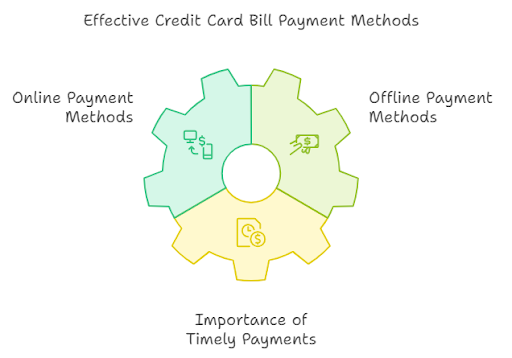
How to Pay Credit Card Bills? Navigate Online and Offline Options Like a Pro Managing credit card bills can sometimes feel overwhelming, but with the right approach, it becomes a smooth process. Whether you’re new to credit cards or simply looking for easier ways to manage your payments, knowing your options will help you stay on top of your finances. In this guide, we’ll walk you through the most effective ways to pay credit card bills, both online and offline. With these methods, you’ll be able to navigate the payment process like a seasoned pro. Paying off your credit card bill on time is crucial to maintaining a healthy financial profile. Late payments can lead to penalties, higher interest rates, and a negative impact on your credit score. But don’t worry! Whether you prefer paying your bills digitally or in person, there’s a solution that fits your lifestyle. Online Payment Options In today’s fast-paced digital world, online payments offer convenience, speed, and security. Let’s dive into some of the most popular ways to pay your credit card bills online. Internet Banking One of the most straightforward ways to pay credit card bills is through internet banking. This method allows you to transfer money directly from your bank account to your credit card. Most banks provide a user-friendly online interface, where you can select the credit card payment option and complete your transaction within minutes. All you need is your bank’s online banking credentials and the credit card details. It’s easy, fast, and safe. Once logged in, simply navigate to the “Pay Bills” or “Credit Card Payment” section, and follow the prompts. You can either pay the minimum amount due, the total outstanding, or a custom amount. Some banks even allow you to schedule payments, ensuring you never miss a due date. Mobile Banking Apps With mobile banking apps, paying your credit card bills becomes even more convenient. Simply download your bank’s app from the App Store or Google Play, and follow the same steps as internet banking. Many mobile apps offer additional features like push notifications, payment reminders, and one-click payment options. Plus, mobile banking apps are designed with strong security features like fingerprint or face recognition, ensuring your transactions are safe. If you’re someone who’s constantly on the go, this method is ideal. You can clear your credit card bill while waiting in line for coffee or during your daily commute. Credit Card Issuer’s Website Another easy option is to visit your credit card issuer’s website. Most card issuers provide a dedicated online portal where customers can manage their accounts. Here, you can check your balance, view your transaction history, and pay your bill directly. Paying through the issuer’s website is a reliable option, and you can often choose to save your bank account details for future payments, speeding up the process for the next billing cycle. Make sure to enable two-factor authentication on your account for extra security, and avoid using public Wi-Fi when making payments to protect your financial information. Autopay Services If you’re worried about missing payment due dates, autopay is a fantastic option. Most credit card companies offer an autopay feature, which automatically deducts the bill amount from your linked bank account on a specific date every month. You can choose to pay the minimum due, the total outstanding balance, or any other fixed amount. This method ensures you never miss a payment and helps you avoid late fees and interest charges. However, always ensure that there are sufficient funds in your bank account to prevent failed transactions and overdraft fees. Third-Party Payment Apps In recent years, third-party payment apps like PayPal, Google Pay, and Apple Pay have become increasingly popular for paying credit card bills. Many credit card issuers now support payments via these apps, providing users with another layer of convenience. These apps are particularly useful for those who prefer keeping their financial activities consolidated in one place. Additionally, they often come with built-in features that track your spending, which can help you manage your budget more effectively. Offline Payment Methods Not everyone is comfortable with online payments, and that’s completely fine! There are several reliable offline methods available for paying your credit card bills. Bank Branch One traditional way to pay your credit card bill is by visiting your bank’s branch. This method allows you to make a payment in person, either by filling out a payment slip or asking a bank representative for assistance. If you have the time and prefer a face-to-face transaction, this is a safe and secure option. When visiting the branch, make sure to carry your credit card, account information, and an ID for verification. Once the payment is made, you’ll typically receive a receipt, which you can keep for your records. ATM Payments Did you know that you can also pay your credit card bill at an ATM? Many banks offer the option to make credit card payments through their ATM machines. All you need to do is insert your debit card, choose the “Credit Card Payment” option, and follow the instructions on the screen. This is a great alternative for those who prefer not to visit a bank branch but still want to make payments offline. It’s quick and convenient, especially if you’re already at the ATM to withdraw cash. Cheque or Demand Draft If you’re not a fan of digital payments, paying by cheque is another method you can consider. Simply write a cheque payable to your credit card issuer, ensuring that you include your credit card number in the memo section. Then, either drop it off at the bank or send it via post to your card issuer’s mailing address. This method does take a few days to process, so be sure to send your cheque well before the due date to avoid any late fees. Phone Banking For those who want the convenience of paying bills without using the internet, phone banking is a solid option. You can call your bank’s

OpenAI o1 is Here: New Strawberry AI Model Unveiled – Bizblog News
OpenAI o1 is here, a new Strawberry AI model that thinks before responding : How it works The field of Artificial Intelligence (AI) is progressing rapidly, and OpenAI has launched a new AI model called OpenAI o1 . This is a unique and advanced Strawberry AI model that thinks before giving its answers . This feature of AI makes it different and smarter from other models . OpenAI o1: the beginning of a new era The arrival of OpenAI o1 marks the beginning of a new era where AI doesn’t just follow instructions, but thinks before giving its answers . This model takes special care that the answer to the question asked by the user is accurate and relevant.In previous AI models, most of the time the answers were quick and without deep thought, but the Strawberry AI model breaks this pattern and provides the ability to think in a new way . How does Strawberry AI Model work? The name of Strawberry AI Model may sound simple, but its working style is highly sophisticated. It is specially designed in such a way that it does not just process the data, but tries to understand it. Its first step is thinking – it carefully reads the user’s question, understands its context AI’s thinking ability: what’s new ? Thinking is a new concept for AI. Till now AI was only based on massive data sets and extracting quick answers from them. But OpenAI o1 has this feature added that it thinks deeply before giving the answer . It not only understands the question but also sees how the answer can be beneficial to the user . Why is Strawberry AI Model special ? The biggest feature of Strawberry AI Model is that it uses thoughtfulness and understanding before answering any question . It is not only a powerful language model, but it also belongs to the category of models that will play an important role in deciding the direction of AI in the future . Accurate Answers : OpenAI o1 ensures that answers are correct and clear . Human-like Experience : This model is designed in such a way that it gives almost human-like response . Attention to context : This AI model not only understands the question but also captures the context behind it . What are the benefits of OpenAI o1 ? OpenAI o1 has many advantages, which make it different from other AI models . It is not only fast, but also smart . The answers given by it are based on deep analysis and understanding . Furthermore, this Strawberry AI Model makes the user experience even more intuitive and simple . Accurate and relevant answers The main objective of OpenAI o1 is to provide accurate and relevant answers to users . This model ensures that answers are given correctly rather than quickly . Time saving : This model not only gives accurate answers but also saves time . Its smart mechanism enables it to generate answers faster. The future form of AI : With technical models like OpenAI o1 and Strawberry AI Model, the nature of AI is going to get even better in the future. It is not only making our lives easier but also enriching it more technologically. These models are designed not just for today, but for the coming years, where AI will be used in every field . Technology Benefits of Blockchain Technology | BizBlog News September 7, 2024/No Comments Benefits of Blockchain Technology Blockchain technology marks a significant revolution in the digital world. This technology has challenged traditional systems… Read More Technology of Computer – Latest Insights & News | BizBlog News August 27, 2024/No Comments Computer Technology: A Life Changing Revolution In the present era, computer technology has been able to bring revolutionary changes in… Read More Freelancer Technology Pty Limited News and Updates – BizBlogs August 20, 2024/No Comments Freelancer Technology Pty Ltd News: Latest Updates & Trends An in-depth review of the most recent information and developments concerning… Read More Load More End of Content. UseFull Links Home About Stories Contact Marketing Fundamental of Digital Marketing | BizBlogs News September 12, 2024/No Comments Fundamentals of Digital Marketing : Your Complete Guide Digital marketing is now the foundation of business in the present day.… Read More AI in Digital Marketing: Transforming Strategies – BizBlog News September 10, 2024/No Comments AI Marketing : The Future of Digital Marketing In the rapidly changing digital world, AI Marketing is emerging as a… Read More Digital Marketing Principles – Essential Insights | BizBlog News August 31, 2024/No Comments Digital Marketing Principles A Complete Guide Digital marketing is the foundation of business success in the digital age. This not… Read More Load More End of Content.