Hamas Successor with Iran Ties After Sinwar’s Death | Bizblog News

Hamas Seen Picking Successor Close to Iran After Sinwar Death

The death of Yahya Sinwar, the prominent Hamas leader, has created a leadership void within the organization, prompting speculation about who will fill his role. As the Palestinian militant group looks for a new figurehead, it appears that a candidate with strong ties to Iran is being considered. This development has far-reaching implications, not only for Hamas but also for the broader dynamics of the Middle East, where regional powers are deeply invested in the Israeli-Palestinian conflict. Sinwar’s death marks a pivotal moment for Hamas, as its leadership navigates internal and external pressures, with Iran’s influence becoming more pronounced.

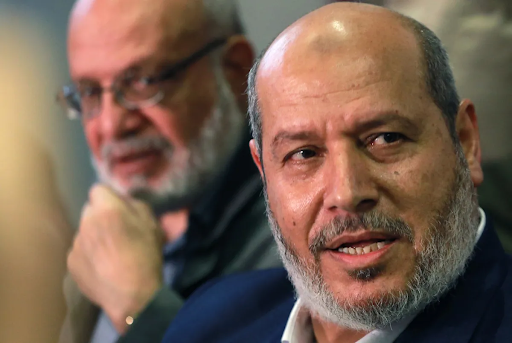
Hamas leadership choosing successor with Iranian ties after Sinwar’s death

Hamas Leadership: Shifting Power Post-Sinwar

Yahya Sinwar, known as one of the most formidable leaders within Hamas, played a significant role in shaping the group’s military strategies and its relations with external allies. His passing leaves a void that Hamas is now trying to fill, and Iran seems to be playing a crucial role in this process. Sinwar had established himself as a pragmatic but uncompromising leader, balancing between militant operations in Gaza and broader political objectives within the region.

With Sinwar gone, Hamas leadership is at a crossroads. The group’s decision to lean towards a successor with closer ties to Iran suggests a deeper alliance between Hamas and Tehran, a relationship that has always been present but could now be entering a more influential phase.

Iran's Influence on Hamas Leadership Choices

Iran has long supported Hamas financially, militarily, and ideologically. The alliance, though occasionally strained by differing political and religious priorities, has endured through shared opposition to Israel and mutual interests in destabilizing Israeli influence in the region. Now, with Sinwar’s death, Tehran’s influence is becoming even more visible in Hamas’s internal politics.

The potential successor is rumored to be a figure who not only has the trust of the current Hamas leadership but also enjoys the backing of Iran’s ruling establishment. This strategic alignment underscores Iran’s growing hand in Palestinian politics, particularly as it seeks to bolster its influence across various resistance movements in the Middle East. For Hamas, this could mean stronger military support and enhanced regional backing, but it also risks further alienating Sunni Arab nations that are wary of Iranian ambitions

Why Iran’s Role Matters in Hamas’s Future

Iran’s involvement in choosing the next Hamas leader is significant for several reasons. First, it solidifies the Islamic Republic’s position as a key player in the Palestinian resistance movement. Secondly, it indicates that Hamas may be moving toward a more radical stance, particularly in its approach to Israel. With Iran’s Revolutionary Guard already providing financial and military support to Hamas’s armed wing, the Qassam Brigades, this alignment could mean an escalation in the conflict.

Additionally, Iran’s backing gives Hamas a powerful ally in the broader axis of resistance, which includes Hezbollah in Lebanon and various militias in Iraq and Syria. This network, coordinated to varying degrees by Tehran, is aimed at countering U.S. and Israeli influence in the region. By positioning a successor with strong Iranian ties, Hamas is reinforcing its commitment to this axis.

Hamas and the Regional Balance of Power

The death of Sinwar and the anticipated shift toward a more Iran-aligned leader could alter the balance of power within Palestinian politics. Historically, Hamas has tried to position itself as an independent Palestinian nationalist movement, even though it has received significant outside support. However, a leader who is more overtly connected to Tehran could shift the organization’s posture, drawing it closer into the orbit of Iran’s regional strategy.

This potential shift comes at a delicate time, with Arab states like Saudi Arabia and the UAE having normalized relations with Israel in recent years. The so-called “Abraham Accords” represent a new reality in the Middle East, where some Arab nations are more focused on economic and strategic partnerships with Israel than on the Palestinian cause. In this context, a more Iran-oriented Hamas risks isolating itself from potential Arab allies while doubling down on its alliance with the Islamic Republic.

The Possible Successor: Who Is on Iran's Radar?

The identity of the potential successor is still under wraps, but several names have surfaced in rumors. One leading candidate is Saleh al-Arouri, a senior Hamas leader who has long been seen as a bridge between Hamas’s military and political wings. Arouri is known for his close connections with Hezbollah and Iran, and he has been instrumental in coordinating military operations against Israel from abroad.

Al-Arouri’s ascension would signal a continuation of Hamas’s current trajectory but with a stronger emphasis on regional alliances, particularly with Iran. His leadership could also mean more coordinated attacks against Israeli targets, potentially leading to a new phase in the Israeli-Palestinian conflict. However, his rise would not be without challenges, especially as internal factions within Hamas may push back against too much Iranian influence.

What Sinwar’s Death Means for Gaza

Sinwar’s death not only affects Hamas’s internal politics but also has implications for the people of Gaza. Under his leadership, Hamas had managed to consolidate power in the territory, maintaining a delicate balance between military resistance against Israel and providing basic governance for Gazans. His death could lead to a period of uncertainty, with potential infighting over the leadership transition.

For the people of Gaza, who have lived under a blockade for over a decade, this uncertainty could mean further delays in much-needed reconstruction and relief efforts. While Iran may provide military and financial support to Hamas, it is unlikely to offer the kind of humanitarian assistance that Gaza desperately needs. This situation could exacerbate existing tensions between Hamas and other Palestinian factions, as well as between Hamas and the broader population.

International Reactions to Hamas’s Leadership Change

The international community is watching closely as Hamas moves to select its next leader. Israel, in particular, will be paying attention to any signs that Hamas is becoming more closely aligned with Iran, as this could indicate an increase in hostilities. Israeli officials have long warned of the dangers posed by Iran’s support for militant groups like Hamas, and a leadership change that brings Hamas even closer to Tehran is unlikely to ease tensions.

The U.S. and its Western allies will also be concerned about the implications of a more Iran-aligned Hamas. Washington has spent years trying to contain Iran’s influence in the region, and a Hamas leadership that is more explicitly connected to Tehran could complicate U.S. policy in the Middle East. At the same time, the U.S. may face challenges in continuing its support for Israel, particularly if the Israeli-Palestinian conflict escalates under new Hamas leadership.

UseFull Links
  • Marketing
Load More

End of Content.

UseFull Links
  • Technology
Load More

End of Content.