
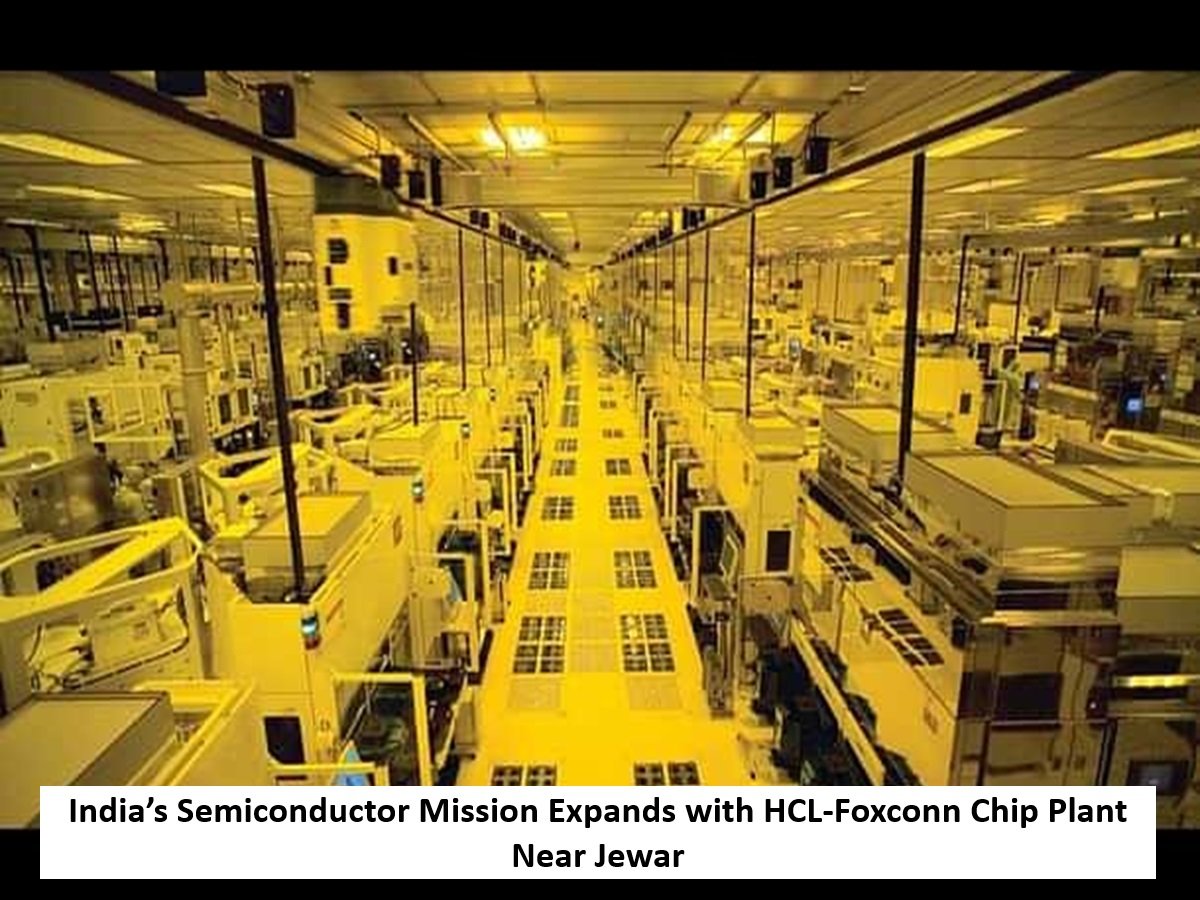
In a significant development under India’s strategic push toward semiconductor self-reliance, the Union Cabinet has approved a new semiconductor fabrication plant to be developed near the upcoming Jewar Airport in Uttar Pradesh. Announced on May 14, 2025, this move marks another milestone under the India Semiconductor Mission (ISM), reinforcing the country’s long-term ambitions to become a global hub for chip manufacturing and electronics production.
Powerhouse Collaboration: HCL and Foxconn Join Forces
The new semiconductor unit will be established through a collaboration between Foxconn, the Taiwan-based electronics giant known for manufacturing components for leading global brands, and HCL Group, one of India’s foremost technology conglomerates. This strategic alliance blends Foxconn’s global semiconductor experience and HCL’s domestic operational expertise, making it a critical piece in the puzzle of India’s tech sovereignty.
Investment and Infrastructure: Rs 3,700 Crore Mega Facility
The proposed project will require an investment of ₹3,700 crore (approximately $445 million), and will be one of the most advanced semiconductor facilities in North India. The plant is projected to process approximately 20,000 semiconductor wafers per month. It will manufacture essential chips such as display driver integrated circuits (ICs), which are pivotal to modern digital devices.
Each wafer processed at this fab will be capable of yielding thousands of microchips, leading to an expected output of around 36 million chips per month. These components will be used in smartphones, laptops, televisions, automotive dashboards, and various other devices that require display technology.
Strategic Location: Near Jewar International Airport
The plant’s location—adjacent to the under-construction Noida International Airport (Jewar Airport)—is of particular significance. Once operational, this hub will benefit from seamless connectivity through air, road, and rail, making supply chain logistics more efficient. It will also serve as a catalyst for regional development, attracting ancillary industries and creating thousands of jobs across skill levels.
India Semiconductor Mission (ISM): Policy Backbone
Launched in 2021, the India Semiconductor Mission (ISM) is a flagship initiative of the Government of India aimed at building a sustainable semiconductor and display ecosystem in the country. The mission seeks to position India as a global player in chip design, manufacturing, and innovation by offering fiscal support to semiconductor firms and R&D institutions.
The Jewar unit is now the sixth fabrication plant approved under this mission, signaling steady and focused progress. Through ISM, the government has committed incentives to attract both domestic and global players, bridging India’s dependency on chip imports and bolstering national security through indigenous capability.
Why Display Driver Chips Matter
Display driver chips, while small, play a crucial role in digital devices. These chips translate the digital data from a device’s graphics processor into the visual information seen on screens. With ever-growing demand for smartphones, wearables, laptops, and infotainment systems in vehicles, the market for such chips is booming.
India currently imports a vast majority of these components. Domestic production will not only save foreign exchange but also reduce supply chain risks associated with global disruptions, like those witnessed during the COVID-19 pandemic and ongoing geopolitical tensions.
Employment and Economic Impact
The establishment of this plant is expected to generate substantial employment in the region. From engineers and chip designers to factory workers and logistics personnel, the project will open up opportunities across the spectrum. Additionally, it will stimulate demand for skills in automation, electronics, precision manufacturing, and materials engineering, encouraging academic institutions and skill-development centers to tailor their programs accordingly.
Furthermore, ancillary industries such as packaging, testing, and logistics are likely to flourish in the surrounding areas, creating an industrial ecosystem that mirrors those in established chip-making hubs like Taiwan and South Korea.
Global Context: India’s Rising Role in Semiconductor Supply Chains
Globally, the semiconductor industry is witnessing a realignment. With major economies diversifying their supply chains away from traditional centers like China, India presents itself as a credible alternative due to its democratic governance, favorable demographics, and improving infrastructure.
The HCL-Foxconn project is a testament to international faith in India’s potential. It follows other significant semiconductor announcements in states like Gujarat and Tamil Nadu, forming a distributed network of tech hubs that align with the government’s vision for a ‘Digital India’.
A Step Closer to Chip Sovereignty
The new semiconductor plant near Jewar is not just another industrial project—it’s a symbol of India’s transition from a consumption-based economy to a tech-driven production powerhouse. As the sixth approved unit under the India Semiconductor Mission, it demonstrates the government’s commitment to building a resilient, self-reliant, and globally competitive semiconductor ecosystem.
With collaborations like HCL and Foxconn leading the charge, and with continued policy support, India is steadily shaping its future in the high-stakes world of chip manufacturing—bringing jobs, innovation, and strategic independence to the forefront of national growth.