Microsoft AI Agents and Autonomous AI Agents | BizBlog News

Microsoft to Roll Out New Autonomous AI Agents Next Month, Fending Off Challenge from Salesforce

Microsoft is preparing for another major leap in artificial intelligence (AI) as it gears up to launch new autonomous AI agents next month. This strategic move comes at a crucial time when the competition in the AI space is heating up, with Salesforce stepping up its game. As businesses worldwide increasingly adopt AI for automation, efficiency, and innovation, Microsoft’s upcoming release signals its commitment to maintaining a leadership position in this fast-evolving landscape.

In this post, we’ll explore what Microsoft’s autonomous AI agents mean for the industry, how this rollout positions the tech giant against Salesforce, and what users and enterprises can expect from this new AI wave.

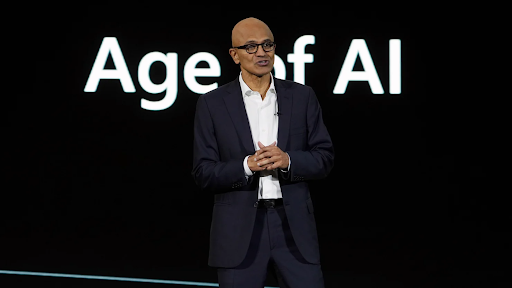
A depiction of Microsoft AI agents, showcasing innovation in automation and AI technology, fending off competition from Salesforce

Microsoft AI Agents: Ushering in a New Era of Autonomy

Microsoft’s upcoming AI agents are expected to represent a significant step forward in AI technology. These agents, designed to function autonomously, will have the ability to perform tasks, make decisions, and interact with users and systems without continuous human intervention. This level of automation promises to transform industries, making processes faster, more efficient, and scalable at unprecedented levels.

By integrating these AI agents into its ecosystem, Microsoft is poised to extend the capabilities of its Azure AI and Dynamics 365 platforms. Enterprises will likely be able to deploy these agents for a wide range of applications—from customer service automation and sales enablement to supply chain management and business process optimization. The result? A future where AI not only supports human tasks but also takes on a more proactive role in business operations.

Fending Off Salesforce: The Battle of the AI Giants

The timing of Microsoft’s AI rollout comes as Salesforce, another major player in the enterprise AI market, strengthens its own AI portfolio. With Salesforce’s recent focus on integrating generative AI into its Customer 360 platform and enhancing its Einstein AI capabilities, the competition between these tech giants is becoming more intense.

Salesforce has been making headlines with its ability to embed AI deeply within customer relationship management (CRM) tools, helping businesses unlock value from customer data and streamline sales processes. However, Microsoft’s new autonomous AI agents may shift the balance by offering even more versatile, enterprise-wide AI capabilities. With Microsoft’s vast infrastructure and suite of business solutions, the company has the potential to integrate AI across its Office suite, Azure cloud platform, and more, offering a holistic AI-powered experience.

Autonomous AI Agents: What to Expect?

So, what can businesses expect from Microsoft’s autonomous AI agents next month? While detailed specifications are still under wraps, there are a few key features that can be anticipated based on Microsoft’s existing AI development trajectory:

  • Advanced Natural Language Processing (NLP): These agents will likely leverage cutting-edge NLP capabilities, allowing them to understand, process, and generate human-like language. This will be crucial in customer service roles, enabling the AI to handle queries, provide solutions, and interact seamlessly with users.
  • Contextual Learning and Decision-Making: The new AI agents are expected to feature advanced machine learning models, allowing them to learn from their environments and make informed decisions. This will enable them to take on more complex tasks over time, increasing their utility in a business context.
  • Seamless Integration Across Platforms: Given Microsoft’s vast product ecosystem, from Azure to Teams and Office 365, these AI agents will likely be designed to integrate smoothly across different applications. This means businesses could see AI-driven efficiencies in communications, project management, data analysis, and more.
  • Improved Automation for Routine Tasks: These autonomous agents will likely focus on reducing the burden of repetitive, manual tasks. From managing schedules and responding to emails to processing orders and analyzing data, the potential for time savings and productivity improvements is significant.

The Broader Implications of Autonomous AI

The introduction of autonomous AI agents isn’t just about improving workflows or cutting costs—it marks a transformative shift in how businesses operate. By taking on more sophisticated tasks with minimal human oversight, these agents could redefine the traditional boundaries of workforce productivity.

For businesses, the benefits are twofold: improved efficiency and the ability to scale operations without proportionally increasing the workforce. For employees, the rise of AI agents could mean a shift in focus towards higher-value tasks that require creativity, critical thinking, and human judgment—tasks that AI, even in its autonomous form, may not easily replicate.

How Will Microsoft’s AI Agents Stand Out?

While many companies, including Salesforce, are racing to enhance their AI capabilities, Microsoft’s approach may provide it with a unique edge. Here’s why:

  • Cloud Infrastructure: With Azure, Microsoft has one of the most robust and scalable cloud infrastructures in the world. This gives it the ability to offer enterprise AI solutions that are not only powerful but also highly scalable, reliable, and secure. Salesforce’s AI, while impressive, may face challenges in matching this level of infrastructure breadth.
  • Enterprise-Grade Security: Security is a top concern for businesses deploying AI technologies. Microsoft’s longstanding reputation for enterprise security—particularly in cloud environments—makes it a trusted partner for companies looking to deploy AI at scale. Autonomous AI agents, handling sensitive data and tasks, will benefit from Microsoft’s strong security protocols.
  • Ecosystem Integration: One of Microsoft’s core advantages is its ability to integrate AI across a wide variety of tools and platforms that businesses already use, from Office 365 to Dynamics 365. This provides a seamless user experience, with AI embedded directly into everyday workflows.

Why Salesforce Should be Concerned

Salesforce has carved out a strong position in the AI space, especially with its CRM focus. However, the introduction of autonomous AI agents by Microsoft is likely to pose a significant challenge. While Salesforce’s Einstein AI excels in making CRM data more actionable, Microsoft’s broader AI ecosystem may attract businesses looking for a more versatile AI solution that extends beyond CRM and into areas like supply chain, finance, and human resources.

In particular, Microsoft’s focus on automation at an enterprise-wide level could outpace Salesforce’s more niche applications. Businesses might find themselves gravitating towards Microsoft’s solutions if they offer a more comprehensive approach to automation and decision-making across multiple departments.

UseFull Links
  • Marketing
Load More

End of Content.

UseFull Links
  • Technology
Load More

End of Content.