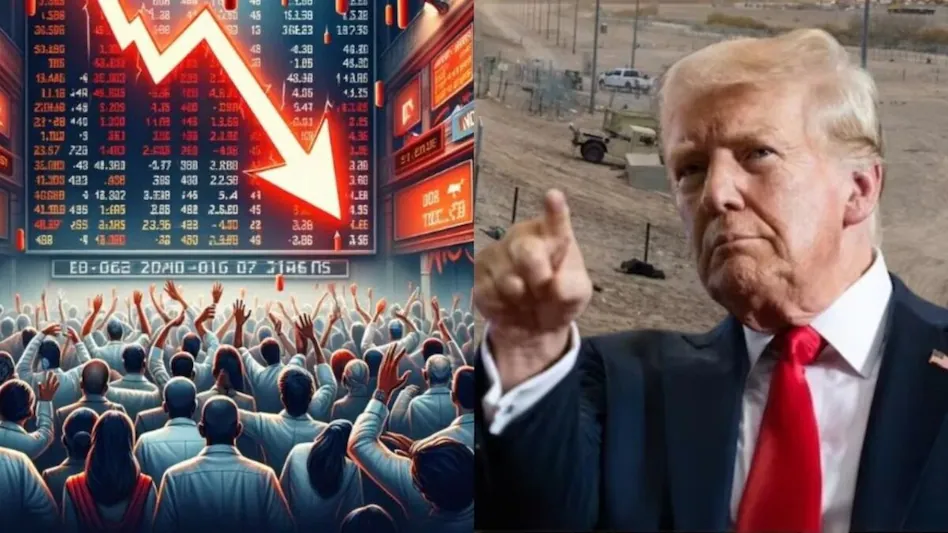
Introduction The global financial markets are facing renewed volatility as the Trump administration announced broader-than-expected reciprocal tariffs. This latest move...
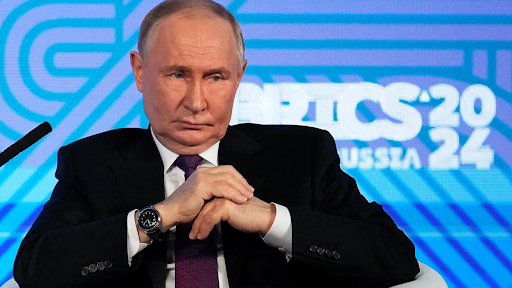
In a recent statement, Russian President Vladimir Putin boldly claimed that BRICS, not the West, will steer the future of global economic growth. This declaration signals a significant shift in the geopolitical landscape and raises crucial questions about the balance of power in the global economy. Putin’s perspective on BRICS is rooted in the idea that the group, composed of Brazil, Russia, India, China, and South Africa, holds the key to the next wave of economic expansion.
Could BRICS nations, with their rapid economic growth and increasing influence, truly eclipse the West in global economics? Or is this just political rhetoric aimed at reinforcing Russia’s pivot away from Western alliances?
The BRICS nations have always been viewed as an emerging coalition with the potential to challenge the traditional Western-dominated global economic order. Formed in the early 2000s, this group represents nearly half of the world’s population and boasts some of the fastest-growing economies. With each member bringing unique strengths to the table—China’s manufacturing might, India’s tech and services boom, Russia’s vast natural resources, and Brazil’s agricultural prowess—BRICS has the collective capacity to redefine global trade and investment patterns.
Putin’s assertion reflects this shift in economic momentum. According to him, the West’s grip on the global economy has weakened, while the BRICS countries are poised to take the reins. For instance, China and India have consistently outpaced the growth rates of Western economies, and their increasing economic collaboration is seen as a critical driver of future global growth.
Several factors explain why BRICS nations are catching up with—and potentially surpassing—the West. First, their growth trajectories have been fueled by strong domestic consumption, infrastructure development, and trade expansions that are less reliant on Western markets. Additionally, BRICS countries have been expanding their influence in global institutions like the World Bank and International Monetary Fund (IMF), advocating for a multipolar world where emerging economies have a greater say.
Russia’s shift away from the West, particularly due to sanctions imposed after the Ukraine crisis, has also driven its economic policies towards closer collaboration with other BRICS nations. Putin’s bet on BRICS reflects a long-term strategic alignment aimed at reducing reliance on Western institutions and fostering stronger economic ties within this bloc.
Putin’s remarks also hint at a deeper critique of the West’s economic model. For decades, the United States and Europe have dominated global trade, finance, and innovation. However, in recent years, these regions have struggled with slower growth rates, political polarization, and internal economic disparities. Meanwhile, BRICS countries have shown resilience, using a mix of state-directed capitalism and market reforms to maintain high growth rates.
According to Putin, Western economies are no longer the engines of global growth they once were. He argues that the U.S. and its allies are grappling with deep-rooted issues such as ballooning debt, rising inequality, and political gridlock, which hinder their ability to lead the global economy. By contrast, the BRICS nations, which are still in the process of expanding and developing, present a more optimistic outlook for the future.
The West’s influence has indeed been challenged by several recent global shifts. The COVID-19 pandemic highlighted vulnerabilities in Western economies, from supply chain disruptions to healthcare crises, which in turn slowed economic recovery. Additionally, rising geopolitical tensions, particularly between the U.S. and China, have strained trade relationships and contributed to economic uncertainty.
While the West still dominates in key sectors like technology, finance, and defense, the rise of China as a global economic superpower and India’s growing tech prowess have eaten into the West’s traditional spheres of dominance. As Putin sees it, these factors make the West less relevant as a driver of future global growth.
The idea that BRICS could replace the West as the primary driver of global economic growth raises a fundamental question: Is BRICS really prepared to take on this role? While these nations boast impressive growth rates and enormous potential, they also face several challenges.
For one, the BRICS nations have vastly different political and economic systems. China, a centrally planned economy, operates in stark contrast to India’s democracy and Russia’s oligarchy. These differences have occasionally hampered the group’s ability to act cohesively on the global stage.
That said, the economic powerhouses within BRICS are hard to ignore. China continues to lead the charge, being the second-largest economy in the world and a dominant force in global trade and investment. India’s tech sector, along with its young and growing population, gives it the potential to become a major economic player in the coming decades. Russia, despite facing economic sanctions, remains a critical supplier of energy and natural resources. Brazil and South Africa contribute vast agricultural and mining resources to global markets, strengthening the BRICS network.
The group’s expansion beyond its five core members could also enhance its global standing. Recent discussions about adding new members to BRICS, including countries from Africa and Latin America, signal an ambition to broaden its influence. If successful, BRICS could transform into a more unified and powerful economic coalition that can rival the West’s historical dominance.
One of the most significant ways BRICS could challenge the West is through the establishment of alternative financial systems. There has been increasing talk of BRICS countries moving towards de-dollarization—reducing their dependence on the U.S. dollar for international trade and finance. This is part of a broader effort to create a more diversified and resilient global economy that is less reliant on Western financial institutions.
For example, China and Russia have already begun conducting bilateral trade in their own currencies, bypassing the U.S. dollar. If BRICS nations were to create their own shared currency or establish new financial mechanisms, it could significantly weaken the dominance of Western banks and the global reliance on the U.S. dollar.
Another major initiative that showcases BRICS’ growing influence is the New Development Bank (NDB), which was established to fund infrastructure and sustainable development projects within the BRICS countries and other emerging economies. The NDB has the potential to rival Western-led financial institutions like the World Bank and IMF, offering an alternative source of funding that is less tied to Western economic policies and interests.
The rise of these BRICS-led financial structures demonstrates the group’s intention to reshape the global financial system in ways that align with their collective goals. This could be a game-changer for global economic growth, reducing the West’s influence while providing BRICS nations with greater autonomy and control over their economic futures.
Putin’s statement about BRICS leading global economic growth is not just about economics; it’s about the geopolitical shift in power. As the BRICS nations continue to grow, invest in infrastructure, and build stronger trade networks, their influence on the global stage will likely increase. While the West remains a formidable economic force, the rise of BRICS cannot be ignored. The next decade will likely see a rebalancing of global economic power, with BRICS playing a pivotal role in driving that change.

Introduction The global financial markets are facing renewed volatility as the Trump administration announced broader-than-expected reciprocal tariffs. This latest move...

Introduction As the world braces for a new wave of tariffs imposed by former U.S. President Donald Trump, global markets...

Market Overview The Indian equity markets faced a turbulent start in Tuesday’s trade, with both the Nifty 50 and Sensex...

Google AI Model Release : The Next Stage in Google’s Virtual Agent Push Google has taken a bold step in...

Ferrari earnings growth 2025 Shares Pop 8% as Luxury Carmaker Sees Further Earnings Growth Ferrari earnings growth 2025 , the...
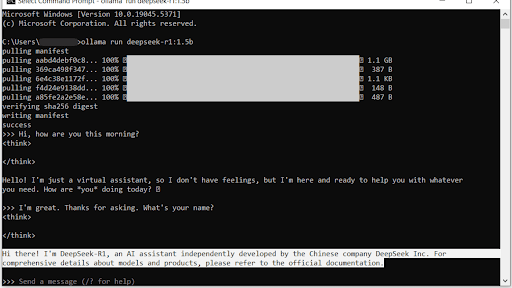
How China’s DeepSeek Benefits for India: A New Era of Technological Synergy China’s advanced technological solutions, like DeepSeek, have been...