
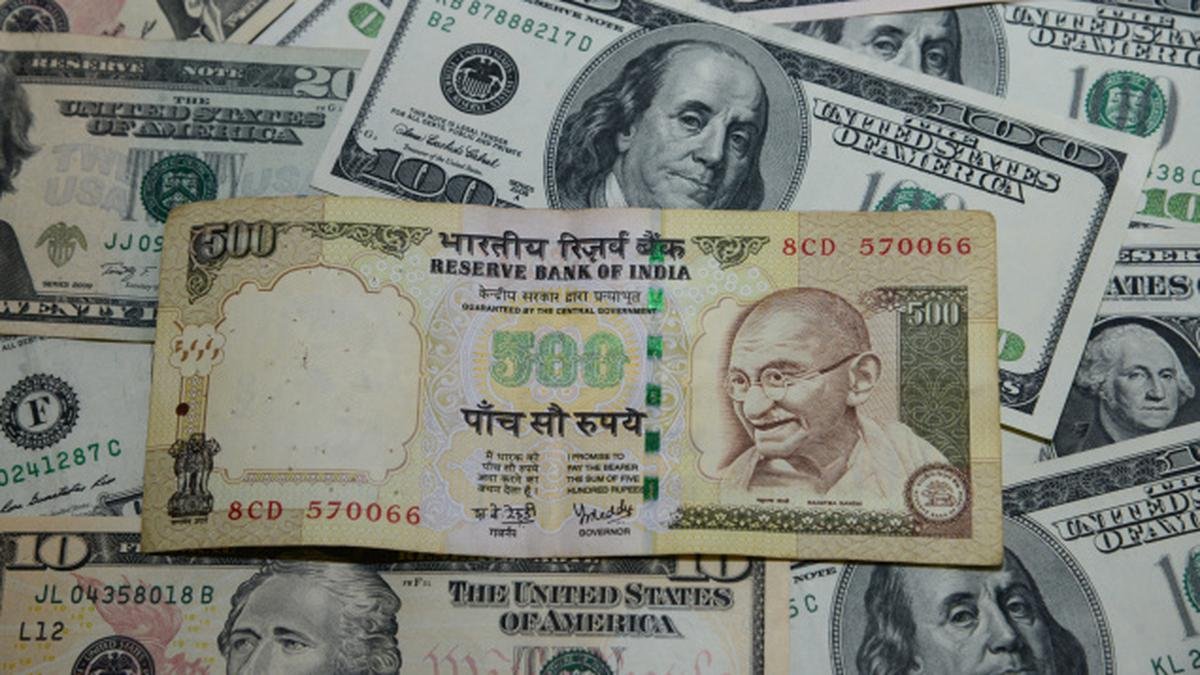
The Indian rupee witnessed a depreciation of 15 paise against the U.S. dollar in early trading hours on Wednesday, April 23, 2025. The domestic currency opened weaker at 85.34 per U.S. dollar, compared to its previous close of 85.19. This decline comes amid renewed strength in the American currency and shifting geopolitical sentiments influencing global market dynamics.
Dollar Strengthens Following President Trump’s Softened Rhetoric
The recent recovery of the U.S. dollar can be attributed to remarks made by U.S. President Donald Trump, who appeared to adopt a more conciliatory approach in his latest statements. In particular, Trump toned down his earlier criticism of the Federal Reserve and expressed a more diplomatic stance towards China. These comments were interpreted positively by global investors, triggering a resurgence in the dollar’s strength across major currency markets.
Analysts believe this shift in tone may signal a more stable policy environment in the U.S., at least in the short term, which often results in increased demand for the greenback as a safe-haven asset. As a result, emerging market currencies like the Indian rupee tend to come under pressure in such scenarios.
Impact on Indian Markets and Investors’ Sentiment
Despite the rupee’s fall, the Indian equity markets opened on a strong note. The 30-share BSE Sensex climbed by 418.53 points, or 0.53%, reaching 80,014.12, marking a significant upswing. Similarly, the NSE Nifty 50 index advanced by 113.95 points, or 0.47%, to trade at 24,281.20.
Market experts suggest that strong domestic earnings reports and a bullish outlook for several sectors contributed to the equity rally, helping offset the negative sentiment from the currency market. The rise in stock indices indicates that investors remain optimistic about India’s macroeconomic stability and corporate growth trajectory.
Foreign Exchange Market Dynamics
The foreign exchange market is known for its volatility, and multiple factors contribute to daily fluctuations in currency values. In this case, the rupee’s movement reflects both domestic and global developments. The dollar index, which measures the strength of the U.S. dollar against a basket of six major currencies, showed a modest gain in early Asian trade, further exerting downward pressure on the rupee.
Additionally, crude oil prices remain a concern for the Indian economy. Higher global oil prices tend to negatively impact the rupee, as India is a major importer of crude. An increase in oil import bills can lead to a higher current account deficit, placing further stress on the domestic currency.
Experts’ Take: What Lies Ahead for the Rupee?
Currency market analysts are watching the evolving global economic and political landscape closely. According to several forex strategists, if the dollar continues its upward trend, the rupee may face further headwinds in the coming days.
However, they also highlight that the Reserve Bank of India (RBI) could intervene in the forex markets to stabilize the rupee if volatility increases significantly. The central bank has in the past stepped in to manage sharp fluctuations and maintain orderly market conditions.
Furthermore, upcoming data releases, including India’s fiscal deficit numbers, trade balance, and inflation figures, will likely influence investor sentiment and rupee performance in the near term.
Investor Strategies Amid Currency Volatility
With the rupee under pressure, investors may consider rebalancing their portfolios to mitigate currency-related risks. Export-oriented companies, especially those in the IT and pharmaceutical sectors, often benefit from a weaker rupee as their earnings in foreign currencies translate into higher rupee revenues. As such, these stocks tend to attract investor interest during periods of currency depreciation.
On the flip side, sectors heavily dependent on imports or foreign debt—such as aviation, automobile manufacturing, and infrastructure—may face higher input costs, which could impact their margins. Market participants are advised to adopt a cautious approach and diversify their investments to hedge against forex risks.