
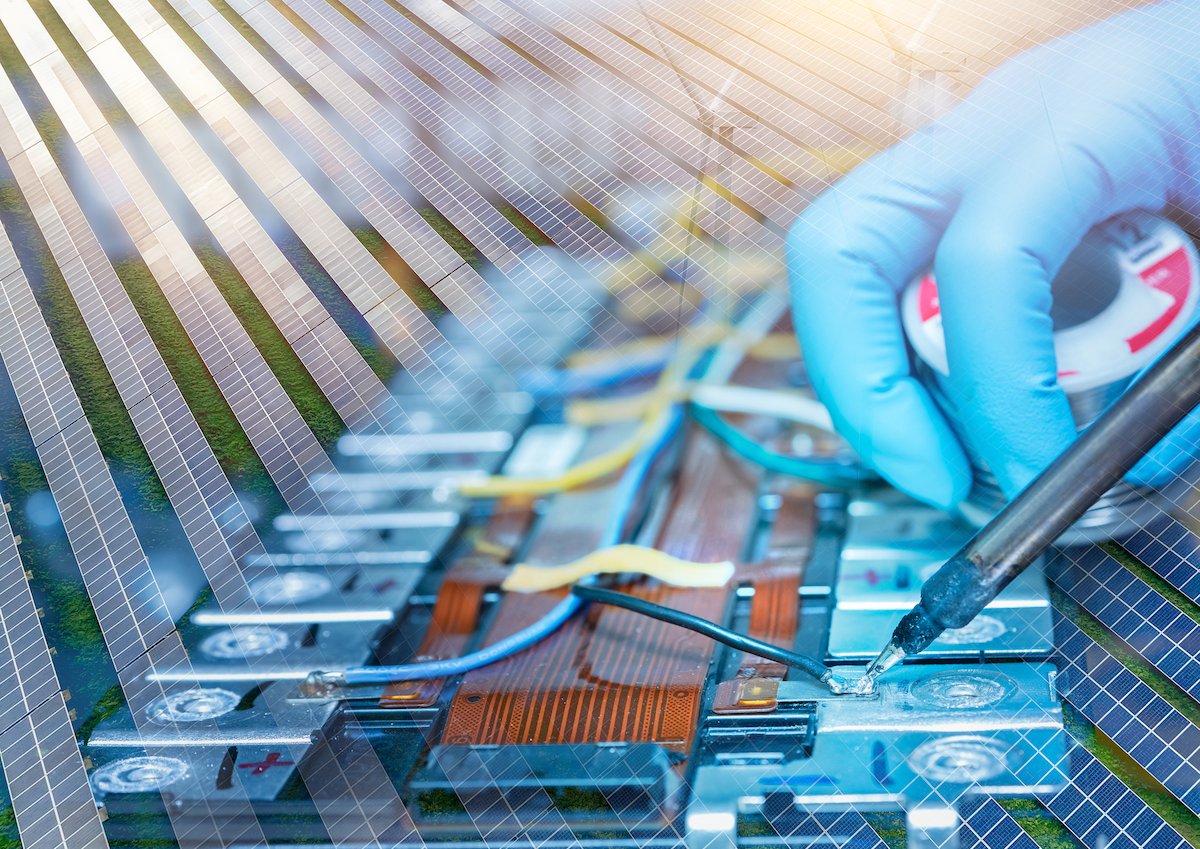
Romanian chemical company Sinteza Oradea (BVB: STZ) has officially canceled its ambitious plan to build a large-scale battery energy storage facility in Oradea. The €50 million project, initially hailed as a significant advancement in Romania’s green energy landscape, has been shelved due to concerns over the economic viability of the technology involved.
The planned project was set to utilize redox flow battery technology from U.S. defense and aerospace giant Lockheed Martin. Despite the promise of the technology and the strategic value it holds for long-term energy infrastructure, Sinteza determined that the current economic conditions and technological readiness are insufficient to support a sustainable launch.
Market Reaction
Following the cancellation announcement, shares of Sinteza on the Bucharest Stock Exchange experienced a sharp decline. This comes in stark contrast to the surge observed in late 2024, when the battery storage project was first announced. Investors had responded enthusiastically to the potential of the project, considering it a bold and innovative move in the energy storage sector. However, the abrupt reversal has since dampened that optimism.
The company issued a statement clarifying its position:
“Redox flow technology is promising and strategically valuable in the long term for the energy sector, but the current moment does not yet provide all the necessary conditions for the sustainable launch of this project.”
Background of the Project
The idea for the battery storage facility was publicly introduced in late November 2024. The initiative aimed to support Romania’s transition toward renewable energy and grid stability by using advanced long-duration energy storage systems. Such systems are critical for managing intermittent renewable sources like solar and wind, especially in a region increasingly focused on reducing carbon emissions and increasing energy independence.
Lockheed Martin’s redox flow battery technology, known for its scalability and long lifespan, was to be at the core of the project. The technology allows energy to be stored in large tanks of liquid electrolyte, making it suitable for grid-scale storage needs. The plant was expected to not only serve domestic energy demands but potentially position Romania as a key player in the regional energy storage market.
Reasons for Cancellation
While the technology had many theoretical advantages, Sinteza cited two primary factors for halting the project:
1. Lack of Economic Efficiency
Despite the strategic value of the redox flow technology, Sinteza found that it does not yet deliver the level of cost-efficiency required for commercial-scale deployment. Building and maintaining such storage systems requires significant upfront investment, and the expected return on investment (ROI) did not meet the company’s financial criteria under current market conditions.
2. Unfavorable Market Timing
The global energy landscape remains in flux. Although the European Union continues to push for greater investment in renewable infrastructure, inflation, high interest rates, and unstable energy markets have made it difficult to commit to long-term capital-intensive projects. Sinteza concluded that launching the project now would pose a high risk, especially when energy storage subsidies and incentives remain inconsistent.
Industry Impact
The cancellation of this project sends ripples through both the Romanian and broader European energy sectors. It highlights the challenges associated with scaling up next-generation battery technologies, even when the political and environmental will is present.
Romania has made steady progress in its renewable energy goals, but the absence of robust storage solutions remains a bottleneck. Projects like the one proposed by Sinteza were expected to bridge that gap. With its cancellation, stakeholders may need to recalibrate their expectations and timelines for energy storage integration.
Furthermore, this development underscores the necessity for more supportive regulatory and financial frameworks if Eastern European nations are to match Western Europe’s pace in renewable energy deployment.
Future Outlook for Sinteza
Though the battery factory project has been scrapped, Sinteza remains committed to participating in Romania’s evolving energy sector. The company has indicated that it will continue to explore other sustainable and economically viable ventures.
By stepping back from this project, Sinteza demonstrates a cautious but pragmatic approach. The decision may protect the company from financial overreach while still keeping the door open for future investments should market conditions improve or the technology become more affordable and scalable.
What’s Next for Redox Flow Technology?
Redox flow batteries are widely seen as a promising solution for long-duration energy storage. Unlike lithium-ion batteries, they can be scaled more easily and have a longer operational life. However, their commercial rollout has been slower than anticipated, mainly due to cost and complexity.
Experts suggest that while the technology is not yet ready for mass deployment, it remains an important part of the future energy mix. Continued research, along with supportive policy and investment environments, will be crucial to overcoming current hurdles.
Sinteza Oradea’s decision to cancel its €50 million battery storage factory is a reminder of the complex interplay between technological innovation, economic feasibility, and market readiness. While redox flow batteries may play a significant role in the future of energy, their time has not yet arrived—at least not for Sinteza or Romania.
The company’s choice reflects both caution and foresight, potentially preserving shareholder value and leaving room for more strategically timed investments in the future. As the energy sector continues to evolve, industry watchers will be keen to see how Sinteza and others adapt their strategies to align with technological and economic realities.