
A New Economic Battlefront
The ongoing trade conflict initiated by former U.S. President Donald Trump has begun to leave visible marks on the Chinese economy. While initial signs suggested resilience from Beijing, deeper analysis reveals early cracks beneath the surface. The first wave of tariffs and retaliations has not yet derailed China’s economic engine, but there are growing indications of strain, particularly in investment and industrial sectors. As tensions persist, the sustainability of China’s economic strength is under question.
Retail Sector Shows Surprising Strength
Despite mounting pressure from trade tariffs and global uncertainty, China’s retail sector has emerged as a surprising pillar of support. Recent government data for May suggests that consumer confidence remains intact, fueling solid domestic consumption. Retail sales showed strong growth year-over-year, indicating that internal demand is helping counterbalance the effects of declining foreign trade in certain sectors.
Chinese consumers are continuing to spend on electronics, apparel, and luxury goods. This shift toward domestic consumption reflects a long-term strategy of transitioning from an export-driven economy to one that relies more heavily on internal demand. However, analysts caution that retail alone cannot carry the weight of the broader economy if other sectors falter.
Investment Slumps Amid Uncertainty
While the retail sector is experiencing growth, fixed asset investment—a key driver of economic development—is showing signs of weakness. Businesses, facing uncertainty due to escalating tariffs and global supply chain disruptions, are holding back on new projects. Real estate investment has plateaued, and industrial investment is lagging behind.
The lack of robust investment signals diminishing confidence among Chinese businesses. Many firms are reluctant to commit capital in an environment where geopolitical tensions could significantly alter production and trade flows overnight.
Industrial Deflation Raises Red Flags
A deeper concern emerging from the recent data is factory-gate deflation. China’s producer price index (PPI), which tracks the prices of goods as they leave factories, has continued to decline. This deflation points to lower demand for manufactured goods and shrinking profit margins for manufacturers.
This trend is especially alarming given China’s significant reliance on manufacturing as a backbone of its economy. Prolonged deflation could lead to reduced wages, layoffs, and further economic slowdowns in related sectors.
Export Growth Masks Deeper Issues
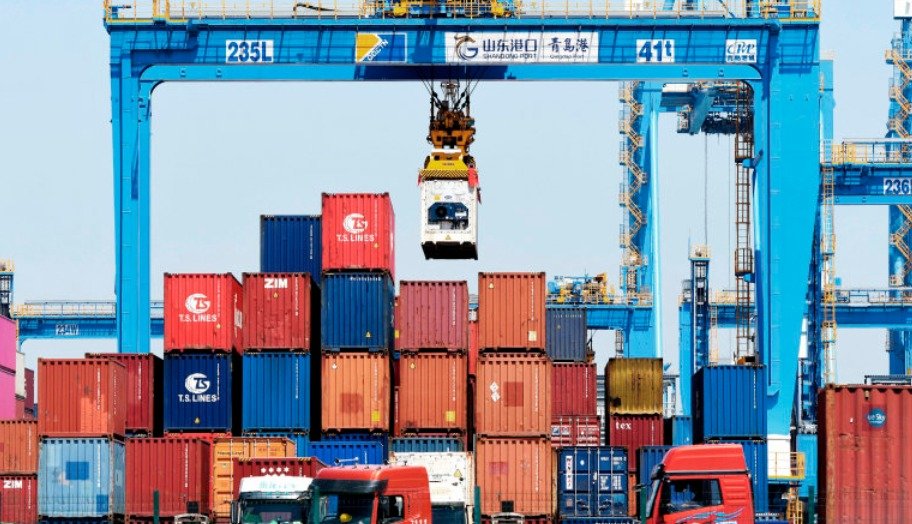
Interestingly, China’s export sector has shown surprising growth despite the trade war. In May, exports to several countries—including those outside the United States—saw a notable increase. This unexpected boom can partly be attributed to front-loading, where companies rush to ship goods before additional tariffs take effect.
Moreover, China has been diversifying its trade partnerships, increasing exports to countries in Southeast Asia, Europe, and Latin America. However, this may only provide temporary relief. Experts warn that export growth in the current climate is unlikely to be sustainable, especially if the trade war escalates further or global demand softens.
Imports Decline: A Sign of Weakening Domestic Demand?
While exports have risen, imports have seen a sharp decline. This drop suggests that domestic businesses are buying fewer foreign goods, which may indicate slowing economic activity and reduced demand for raw materials and components used in manufacturing.
This contraction in imports may also reflect a deliberate shift by China to rely more on domestic supply chains and reduce dependence on foreign inputs. While this could bolster self-sufficiency, it also hints at an undercurrent of economic caution and retrenchment.
Trade Balance Under Transformation
China’s trade balance is undergoing a significant transformation. The combination of strong exports and weakening imports has widened the trade surplus. While this may appear beneficial in the short term, it underscores an imbalance that could backfire if domestic consumption and investment continue to weaken.
A prolonged period of export reliance without robust internal demand and investment could leave China vulnerable to further shocks—whether from escalating tariffs, global economic slowdown, or internal structural weaknesses.